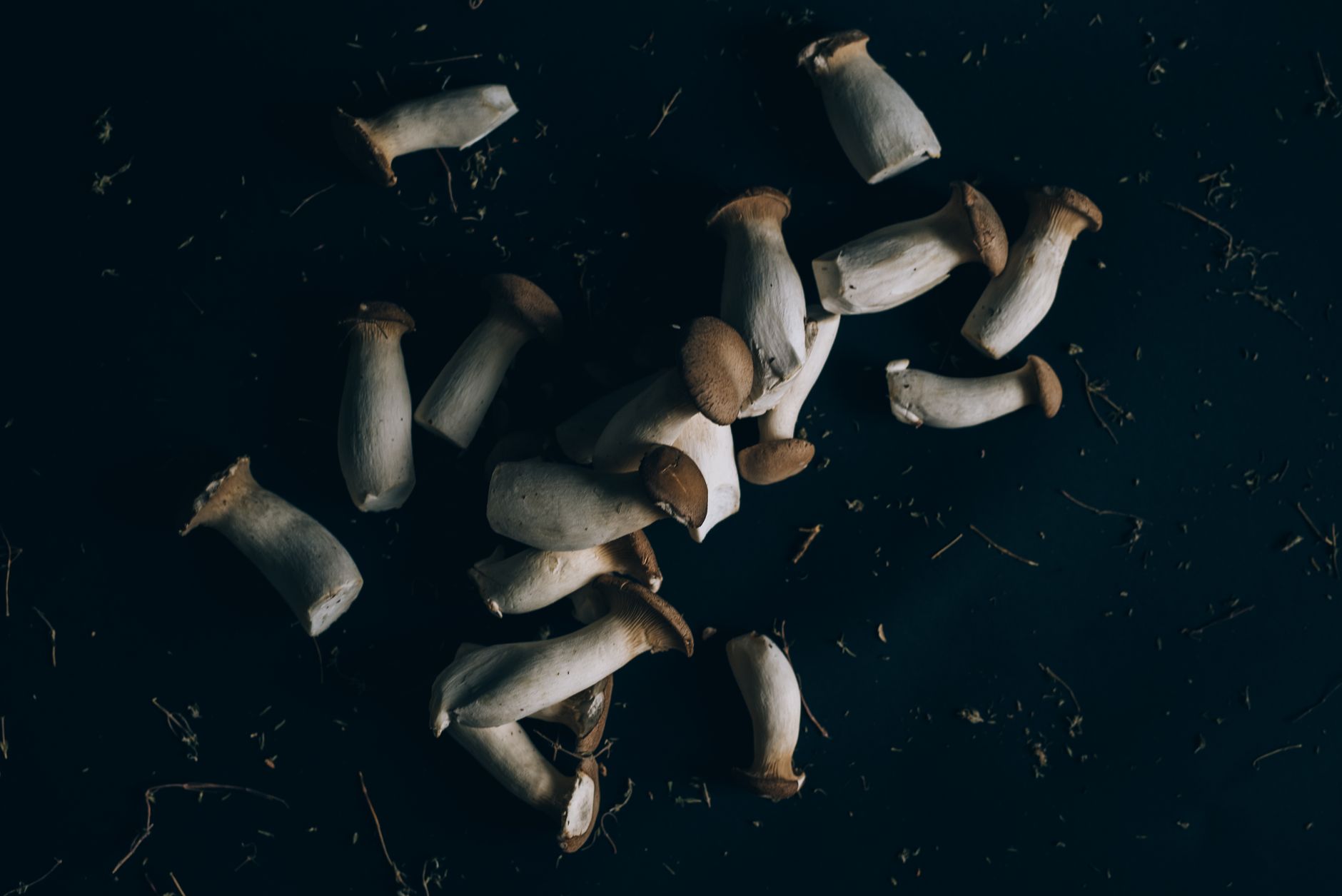
A detailed close-up of assorted dried mushrooms on a dark background, showcasing texture and variety.

How to Make Grain Spawn for Mushrooms: Step-by-Step Guide

Quick Answer: Make grain spawn by simmering rye berries until hydrated, surface-drying, packing into jars, pressure sterilizing at 15 PSI for 90 minutes, cooling, then inoculating with liquid culture. Best grains: rye berries (gold standard, $8–15 per 5 lb bag), wheat berries (more available, $6–12 per 5 lb bag), milo/sorghum (small grain, excellent colonization, cheap at farm stores). Making your own grain spawn is the skill that separates beginner mushroom growers from intermediate ones. A $10–15 syringe of liquid culture can produce 10–15 jars of grain spawn, which in turn can inoculate 50–100 lbs of substrate. This guide takes you from raw grain to fully colonized spawn ready for use. ...

April 25, 2026 · 6 min · GrowMushrooms
A variety of wild mushrooms laid on dark fabric, showcasing earthy tones and textures.

How to Pasteurize Straw for Mushrooms: Heat and Lime Methods

Quick Answer: Pasteurize straw by submerging it in 160–180°F water for 1–1.5 hours, then cooling before inoculating with oyster mushroom spawn. Alternatively, the cold lime method (pH 12 water, 12–18 hours soak) achieves similar results without heating. Straw is the go-to substrate for oyster mushrooms — pasteurization removes competing bacteria without sterilizing. Straw pasteurization is the first major skill in mushroom cultivation. Get it right and your oyster mushrooms colonize fast and clean. Get it wrong — too hot, too wet, or inoculate while still warm — and you get a bag full of green mold within a week. The good news is it’s a very learnable skill, and both methods here are reliable once you understand the principles. ...

April 25, 2026 · 6 min · GrowMushrooms
Closeup of brown soft cap of fresh uncooked edible mushroom on brown background

Lion's Mane Mushroom Growing Guide: From Spawn to Harvest

Quick Answer: Hericium erinaceus (lion’s mane) is one of the most beginner-friendly gourmet mushrooms you can grow at home. Inoculate hardwood sawdust blocks with grain spawn, colonize at 65–75°F for 14–21 days, then fruit at 60–75°F with 85–95% humidity. Harvest before the spines yellow (usually 30–40 days total). Expect 1–3 flushes per block, with first-flush yields of 100–200g on a 5 lb block. Why Lion’s Mane Is Beginner-Friendly Among the many gourmet mushrooms available to home cultivators, Hericium erinaceus — commonly called lion’s mane, bearded tooth, or pom-pom mushroom — stands out as a remarkably forgiving first project. Unlike shiitake, which demands precise log or block aging, or oyster mushrooms that require exacting fresh air exchange, lion’s mane handles minor environmental variations with grace. ...

April 25, 2026 · 16 min · GrowMushrooms
A close-up view of a cluster of delicate mushrooms growing on a rock in a natural setting.

Mushroom Contamination Identification Guide: Green Mold, Wet Rot, and More

Quick Answer: The most common mushroom grow contaminants are Trichoderma (bright green mold — always discard), bacterial wet rot (slimy, sour smell — caused by excess moisture), and cobweb mold (gray/white wispy — can be managed with FAE). Most contamination occurs during inoculation rather than sterilization. When you see contamination, discard the block immediately and don’t open it indoors. Contamination is the #1 cause of frustration for beginner mushroom growers. Opening a jar you’ve been waiting 2 weeks for to find a solid mass of green mold is disheartening — but it’s also a diagnostic opportunity. Different contaminants tell you different things about what went wrong in your process. Once you can identify what you’re looking at and what caused it — the Mushroom Expert resource is helpful — you can fix the process and dramatically reduce contamination rates. ...

April 25, 2026 · 6 min · GrowMushrooms
Cluster of small mushrooms growing on damp forest floor in autumn.

Mushroom Cultivation Statistics 2026: 45 Key Facts, Trends & Data Points

Key Takeaways: The global mushroom market topped $65 billion in 2026 and is on track to exceed $156 billion by 2033 (Grand View Research, 10.2% CAGR). China produces over 75% of the world’s mushrooms. The US alone sells over 650 million pounds of Agaricus mushrooms annually. Functional and medicinal mushrooms — lion’s mane, reishi, cordyceps — are the fastest-growing segment at 11%+ CAGR. And psilocybin therapy has crossed 134 registered clinical trials, signaling a seismic shift in how the world sees fungi. ...

April 25, 2026 · 17 min · GrowMushrooms
High angle of delicious raw mushrooms with spotted caps placed on light brown background

Mushroom Fruiting Conditions Guide: Temperature, Humidity, and Fresh Air

Quick Answer: Mushrooms need three things to fruit: high humidity (85–95%), adequate fresh air exchange (CO2 below 1,000 ppm), and species-appropriate temperature. Most failures — aborted pins, elongated stems, small caps — trace back to low humidity or insufficient fresh air. The simplest fruiting setup is a Martha tent with a humidifier, timer, and small fan. Getting your fruiting conditions right is the difference between a block full of beautiful mushrooms and a block covered in aborted pins or no pins at all. The good news: mushrooms are telling you exactly what they need through their growth patterns — if you know what to look for. This guide covers every environmental variable that affects mushroom fruiting, with specific targets for the most popular cultivated species. See our contamination identification guide if you’re troubleshooting abnormal growth. ...

April 25, 2026 · 6 min · GrowMushrooms
Pair of wild mushrooms growing amidst fallen leaves on a forest floor.

Oyster Mushroom Grow Kit Contamination: Causes and How to Fix It

Quick Answer: Quick Answer: Oyster mushroom grow kit contamination commonly arises from molds like trichoderma, bacteria, and cobweb mold, often caused by improper moisture or temperature conditions. Fixing contamination involves isolating affected areas, adjusting humidity and temperature, and applying proper sterilization techniques to prevent spread and ensure healthy mushroom growth. What Are the Common Causes of Contamination in Oyster Mushroom Grow Kits? Contamination in oyster mushroom grow kits is one of the most frequent challenges that cultivators face. Several factors contribute to these undesirable microbial invasions. The three most common types of contamination are trichoderma (a blue-green mold), bacterial contamination characterized by slimy wet patches and sour odors, and cobweb mold, which appears as gray, wispy, and rapidly spreading growths. These contaminants disrupt the healthy growth of oyster mushrooms and often lead to crop failure if not promptly addressed. According to Fungi Academy, these are the predominant contamination types to watch for during cultivation. ...

April 25, 2026 · 7 min · GrowMushrooms
Cluster of small mushrooms growing on mossy pavement, capturing nature's resilience.

Why Your Mushroom Grow Kit Has Contamination: Causes and How to Fix It

Quick Answer: Quick Answer: Contamination in mushroom grow kits is usually caused by molds like Trichoderma, bacteria, or cobweb mold, often introduced through equipment or improper sterilization. Fixing it involves maintaining proper hygiene, sterilizing substrate correctly, controlling temperature and humidity, and monitoring substrate hydration closely to prevent mold growth. What Causes Contamination in Mushroom Grow Kits? Contamination in mushroom grow kits arises from various sources, primarily molds, bacteria, and other unwanted fungi that compete with or harm the mushroom mycelium. The most common contaminant is the green mold caused by Trichoderma, a fungus notorious in mushroom cultivation. According to Penn State Extension, this fungus can cause crop losses ranging from 30% to 100%, with Pennsylvania alone experiencing losses over $30 million during a notable outbreak between 1994 and 1996. ...

April 25, 2026 · 6 min · GrowMushrooms