Black trumpet (Craterellus cornucopioides) is one of the most prized wild mushrooms. Chefs love its smoky, fruity aroma. Home growers often ask if they can cultivate it. The short answer is yes in theory, but not like oyster or shiitake. This mushroom is mycorrhizal. It needs a living tree partner to survive. The North American Mycological Association stresses that mycorrhizal fungi form partnerships with tree roots. Indoor sawdust kits do not work. This guide covers an experimental outdoor method. It is for determined growers only.
Black trumpet is not a beginner project. It will not fruit from grain spawn on straw. The mycelium grows slowly. It must colonize root tips of a compatible host. Oak, beech, birch, and hazelnut are common host trees. Research from Penn State Extension shows that mycorrhizal mushrooms require symbiosis with live plants. You cannot pasteurize a substrate and expect flushes. Most home growers should instead consider easier saprobic species. For example, you can learn how to grow lion’s mane at home. But if you want to try black trumpet, follow the experimental process below.
Expect a long timeline. Inoculated tree seedlings may need two to five years before the first mushrooms appear. The process is closer to orchard establishment than mushroom farming. Still, it is possible in a controlled nursery setting. You need a pure culture, host seedlings, a clean lab area, and an outdoor planting site. You also need patience and a backup plan. If your goal is reliable indoor yields, read best mushroom grow kits 2026. That list covers easier indoor species. If you still want the challenge, keep reading.
This guide will walk you through the biology, materials, inoculation, care, and realistic harvest expectations. We include specific data points for substrate pH, humidity, and colonization times. Keep identification safety first. Never eat a wild mushroom unless an expert positively identifies it. The mushroom contamination identification guide can help you distinguish healthy mycelium from mold. Let’s get into the method.
What You’ll Need
- Pressure cooker or autoclave
- Agar, Petri dishes, scalpel, parafilm
- Still air box or laminar flow hood
- Host tree seedlings (oak, beech, birch, or hazel)
- Sphagnum peat, vermiculite, pine bark, calcium carbonate
- pH meter
- Humidity controller and spray bottle
- Pruning shears, mulch, watering can
How Do You Grow Black Trumpet Mushrooms at Home?
- Understand the biology and set realistic expectations
Black trumpet is not a saprobic mushroom. It does not decompose wood, straw, or compost. It forms mycorrhizae with the root tips of certain hardwood trees. The fungus enters the root cortex and exchanges nutrients. Trees give carbon sugars, and the fungus supplies water and minerals. This is a mandatory relationship. Without a live host, the mycelium cannot survive long. That is why indoor bags fail. It is also why you need to think like a nursery grower.
Do not expect flushes in a grow tent. This project takes years. Penn State Extension notes that mycorrhizal mushrooms often need mature tree root systems. Even successful inoculation may not produce mushrooms until the tree is well established. You are growing a tree and a fungus at the same time. The payoff is a perennial outdoor patch. It can fruit for many years once established.
For initial culture growth, keep temperatures between 68 and 72 degrees Fahrenheit. Root colonization can be seen under a microscope after 30 to 60 days. But visible aboveground growth is slow. The tree will look normal. You may not see any fungus for two years. Do not dig up roots to check. Disturbing roots breaks the mycelial network.
Before you start, review mushroom fruiting conditions guide. It explains why different species need different humidity, airflow, and temperature. Black trumpet fruiting happens outdoors in fall. The conditions are cool and moist. But that is far in the future. Right now, focus on building the relationship.
- Gather host tree seedlings and lab supplies
You need host tree seedlings. Choose oak, beech, birch, or hazel. Buy bare root or container seedlings from a native plant nursery. Do not use trees from a conventional nursery that were heavily fertilized. The roots should be young and healthy. You need one culture of Craterellus cornucopioides. You can isolate it from a fresh wild mushroom or purchase a verified culture from a lab. Avoid unknown online cultures unless the seller provides the scientific name and source.
You also need a pressure cooker or autoclave, Petri dishes, agar, scalpel, parafilm, and a still air box or laminar flow hood. A reliable pressure cooker is essential for sterilizing tools and substrate. Check the pressure cooker on Amazon. You will also need a pH meter, a spray bottle, and clean pots. For later humidity control, a digital controller can help in the indoor nursery. Check the humidity controller on Amazon.
A small grow tent or a dedicated shelf with clear plastic works for keeping humidity stable. Seedlings under lights or near a bright window need 12 to 16 hours of light daily. A simple LED shop light is enough. You do not need a fruiting chamber yet. The goal is root colonization in potted trees. A DIY mushroom fruiting chamber guide is useful later for other species, but not central here.
Cleanliness matters more than technology. Spray your work area with 70 percent isopropyl alcohol. Use a flame to sterilize scalpels. Label every dish with the date and strain. The mushroom contamination identification guide shows what mold and bacteria look like on agar. If your culture is contaminated, discard it. Do not try to save it.
- Obtain or create a black trumpet pure culture
The best starting material is a fresh, young black trumpet. Use a tissue sample from the inner flesh of the cap. Cut the mushroom open with a sterile blade. Take a tiny piece from the middle where contamination is less likely. Transfer it to a nutrient agar plate. Malt extract agar or modified Melin-Norkrans agar works for many mycorrhizal fungi. Keep the plates at 68-72 degrees Fahrenheit.
You can also buy a verified black trumpet culture from a mushroom lab. Ask for the scientific name Craterellus cornucopioides. Ask about the host tree association. A culture collected from oak roots may not colonize birch. The genetics matter. Some labs sell mycorrhizal cultures for research. These are not spawn. They are living cultures on agar or in liquid. Do not purchase grain spawn labeled black trumpet. It is likely not viable for fruiting.
Spore isolation is possible but slower. Place a fresh cap on foil for a spore print. The spores are tiny and pale. Germinating them on agar can take weeks. The resulting culture may be variable. Tissue culture is faster and preserves the parent strain. Whichever method you use, expect slow growth. Black trumpet mycelium is not fluffy and white like oyster mycelium. It can look faint brown or gray. Do not confuse slow growth with contamination.
Do not make grain spawn for this project. The fungus will not colonize grain aggressively. Instead, you will use the agar culture to inoculate a mycorrhizal substrate. If you need a refresher on sterile technique, read how to make grain spawn. The same lab skills apply even though the recipe differs.
- Prepare mycorrhizal substrate and inoculate roots
A mycorrhizal substrate needs to be nutrient poor. Rich compost suppresses mycorrhizae. Use a mix of 2 parts sphagnum peat, 1 part fine vermiculite, and 1 part composted pine bark. Add 1 gram of calcium carbonate per liter of mix to adjust pH. Target a pH between 5.5 and 6.0. Moisten the mix until it holds together when squeezed but does not drip. Sterilize it in an autoclavable bag or jar at 15 psi for 60 minutes.
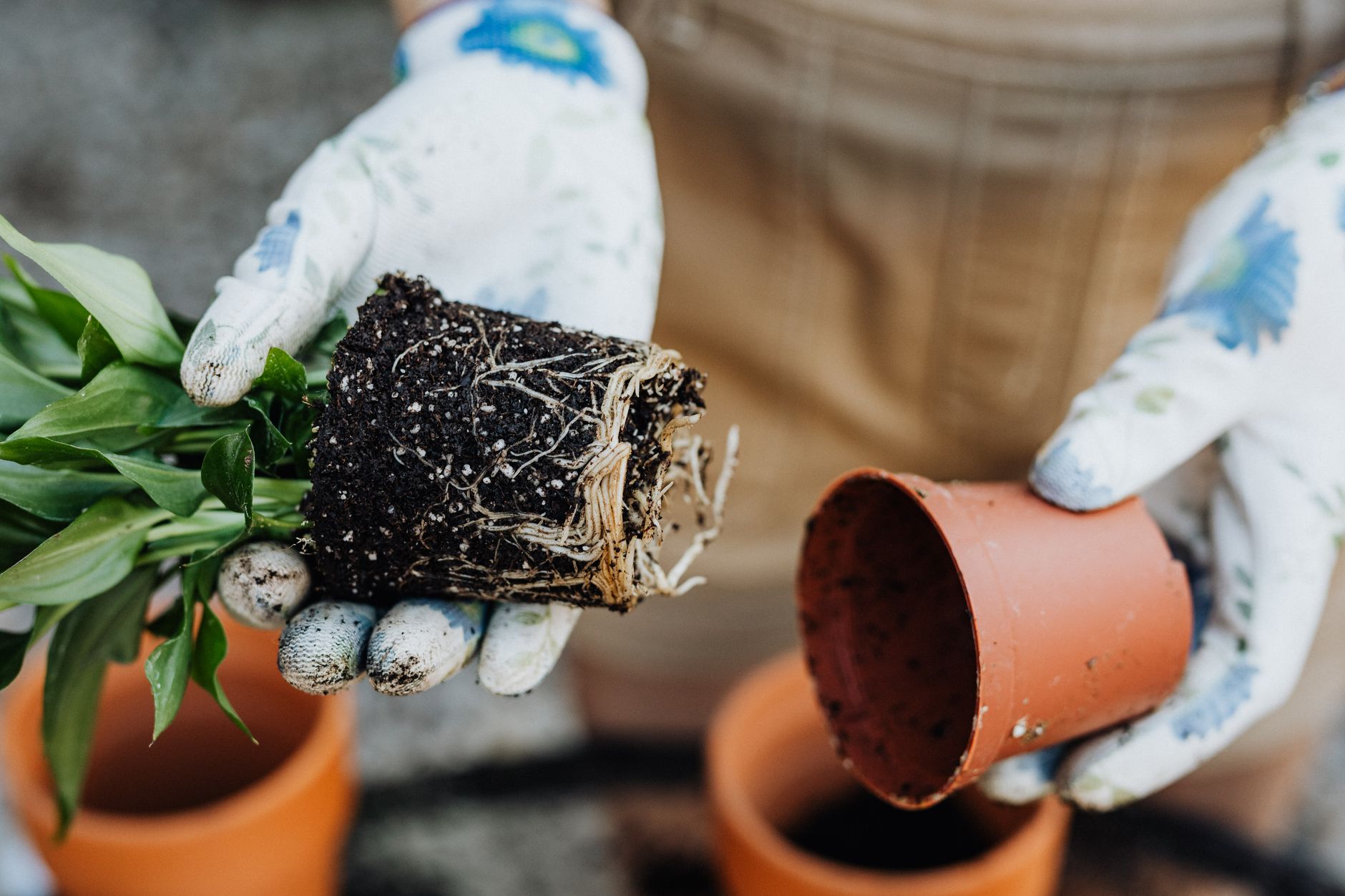
Fill deep pots or tree tubes halfway with the sterile substrate. Gently wash the roots of a young host seedling with sterile water. Do not strip off all soil. Place the seedling in the pot and spread the roots over the substrate. Pour the pure culture slurry over the roots. You can make a slurry by blending the agar culture with sterile water. Add more substrate to cover the roots. Water lightly with sterile water.
Keep the pots at 68-72 degrees Fahrenheit. Do not let them dry out. Root colonization can begin within 30 to 60 days. However, you may not see any sign above the soil. The tree will slowly grow. If you use a clear root tube, you might see brownish mycelial threads on the glass. Do not overwater. Saturated soil creates anaerobic conditions and kills fine root tips.
This is the most delicate step. If you lose a few seedlings, that is normal. Even labs report low colonization rates. You can increase your odds by inoculating many seedlings. Use at least ten per host species. A single successful tree can eventually support a patch. This is also where contamination risk is highest. Any green mold or sour smell means the pot failed. Remove it far away from the rest.
- Grow out seedlings in a controlled environment
Move the inoculated pots to a bright space. A south-facing window or a grow light works. Keep daytime temperatures between 65 and 75 degrees Fahrenheit. Night temperatures can drop by 10 degrees. Humidity around the foliage should stay at 70 to 80 percent. You can use a humidity dome for the first few weeks. Then gradually remove the dome to harden the plants.
Do not use liquid fertilizer. Soluble nitrogen and phosphorus reduce mycorrhizal colonization. If the tree shows signs of nutrient deficiency, use a very dilute organic fertilizer. But it is safer to rely on the mycorrhizal fungus to feed the tree. Water with unchlorinated water. Tap water left out for 24 hours works. Keep the soil moist but not soggy.
You will grow the seedlings in pots for 6 to 12 months. This gives the fungus time to establish along the root system. Do not transplant too early. A root system that has not colonized fully may lose the fungus when moved. The tree should be healthy and well rooted in the pot. You can test by gently tugging the stem. If there is resistance, roots have filled the container.
For more on controlling conditions, read mushroom fruiting conditions guide. It covers temperature, humidity, and airflow in detail. Although black trumpet fruits outdoors, the same principles apply. The plant needs good air movement to avoid mold. A small fan on low can help. Avoid hot, dry air from a furnace.
- Harden off and plant seedlings at the permanent site
Choose a permanent outdoor spot. Black trumpet is associated with mature hardwood forests. The site should have dappled shade and well drained soil. Oak or beech trees nearby are a plus. Avoid areas that flood or stay bone dry. The soil should be slightly acidic with a pH around 5.5. Test the soil and adjust with peat or elemental sulfur if needed.
Dig a hole twice as wide as the pot. Gently slide the seedling out. Do not break the root ball. Place it in the hole at the same depth it was in the pot. Backfill with native soil mixed with a little peat. Do not add compost or manure. Water thoroughly. Mulch with oak leaves or pine needles. The mulch keeps roots cool and moist.
Plant multiple seedlings 10 to 15 feet apart. If you have mature oaks, plant the seedlings near the drip line. The existing mycorrhizal network can help. Do not plant near black walnut or other allelopathic trees. Over time, the black trumpet mycelium may spread and fruit near the host tree. The first fruiting may occur after two to five years.
The soil itself is a living substrate. It is very different from indoor sawdust blocks. You cannot pasteurize it or replace it. Instead, you manage it with mulch and water. For a broader look at substrates, see best mushroom substrate guide. Just remember that mycorrhizal fungi do not consume the substrate. They use the tree.
- Maintain the planting bed for multiple years
Water the planting bed during dry spells. Black trumpet likes moist but not waterlogged soil. In fall, rainfall usually provides enough moisture. In dry autumn, soak the bed once a week. Do not allow the surface to crack. Mulch with two to three inches of oak leaves. Refresh the mulch each year after leaf drop. This mimics the forest floor.
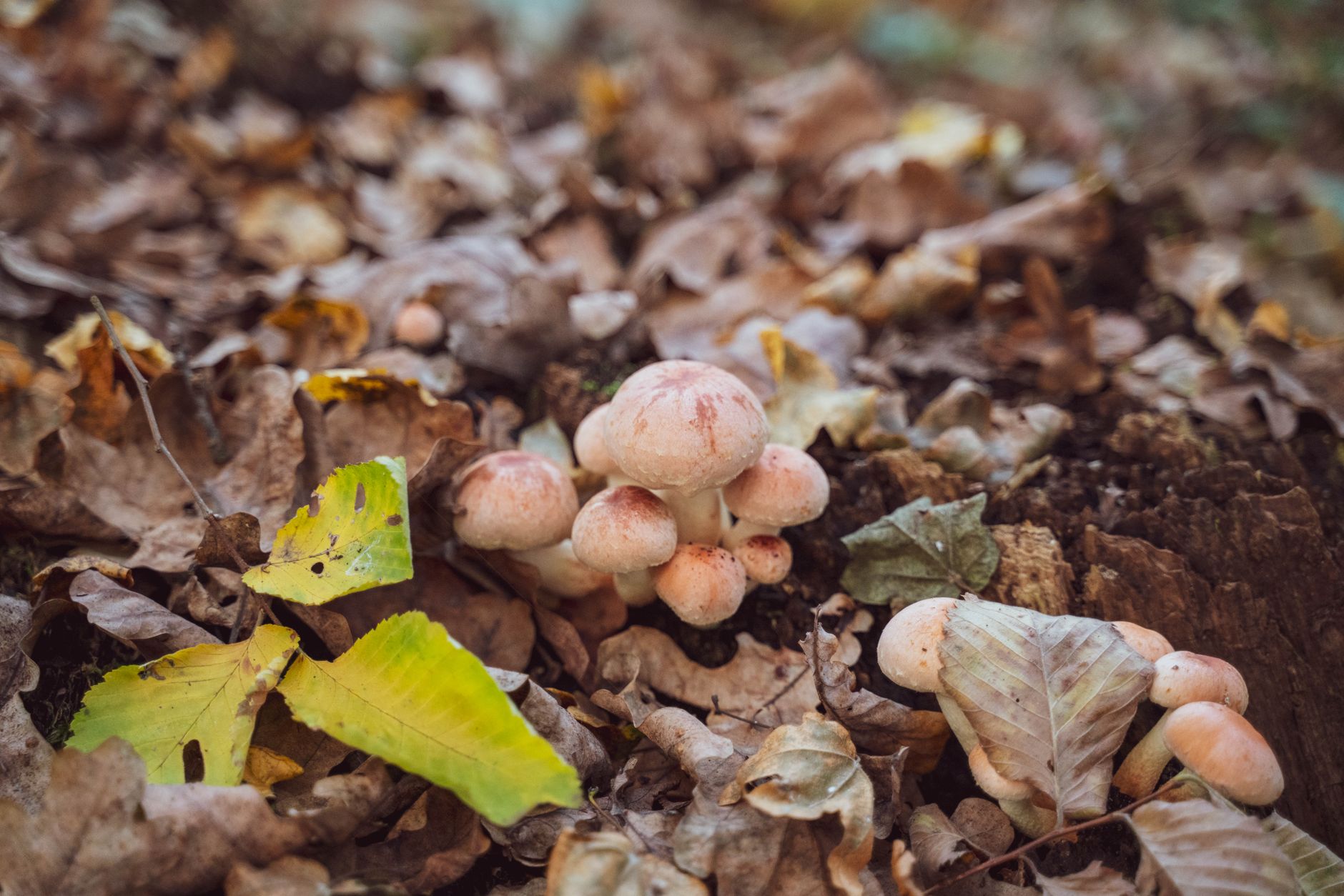
Black trumpet mushrooms fruit when soil temperatures drop to 50 to 65 degrees Fahrenheit. Air humidity should be 85 to 95 percent. This usually happens after late summer and early fall rains. Watch the bed after a cool, rainy period. The mushrooms emerge from moss or leaf litter. They often appear in clusters near the root zone.
Do not fertilize. Do not till the soil. Do not dig around the roots to check for mycelium. Each disturbance breaks the network and delays fruiting. If trees grow too thick, prune small branches to allow more rain to reach the ground. Keep the area weed free by hand pulling. Avoid herbicides. You are managing a small ecosystem, not a farm.
This patience also applies to other mycorrhizal projects. See chanterelle growing guide for a similar challenge. Chanterelles also need host trees and years of care. If your black trumpet bed fruits, it proves the method worked. If it does not fruit after five years, add more inoculated seedlings and keep the site moist.
- Identify, harvest, and verify black trumpet mushrooms
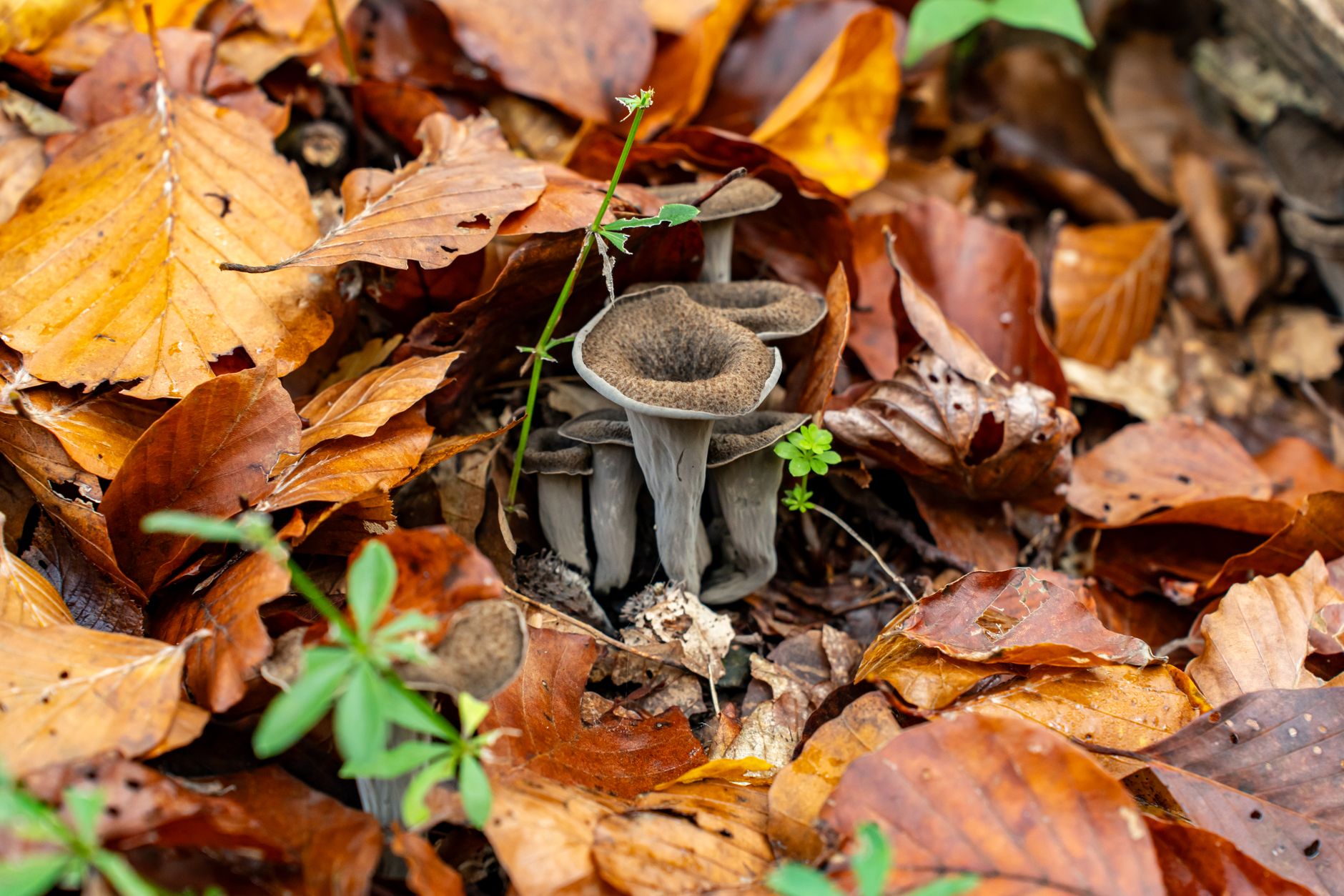
Black trumpet mushrooms are vase-shaped and hollow. The cap is dark brown to black. The underside is smooth or shallowly wrinkled. There are no true gills. They fruit in clusters, often among moss. In good years, they can be abundant. The aroma is sweet and fruity, sometimes compared to apricots. The stem blends into the cap. The whole mushroom is edible when cooked.
Cut the mushroom at soil level with a knife. Do not pull it up. Pulling can damage the mycelial mat. Leave small buttons to mature. Harvest only what you will use. Black trumpets dry well. Spread them on a rack in a warm, dry room for several days. Store dried mushrooms in an airtight jar.
Never eat a wild mushroom unless an expert positively identifies it. The North American Mycological Association has local clubs that can help. Black trumpet has a few lookalikes, but most are not deadly. Still, the rule is absolute. If you are not 100 percent sure, do not eat it. Use multiple field guides and an expert’s confirmation. The mushroom contamination identification guide covers mold, not field identification, so do not use it for edibility calls.
Penn State Extension offers mushroom identification workshops. Their materials emphasize spore prints and microscopic features. For black trumpet, the lack of gills is distinctive. But beginners can still confuse it with other dark cup fungi. Always check with a local expert. If your patch finally fruits, celebrate the achievement. You have grown one of the most difficult mushrooms in the world.
Red Flags & Warnings
- 🚨 Never eat a wild mushroom unless an expert positively identifies it. Black trumpet has few toxic lookalikes, but the risk is not zero.
- 🚨 Do not assume black trumpet will fruit indoors. Indoor sawdust or grain blocks almost always fail because this species needs living tree roots.
- 🚨 Avoid chemical fertilizers near the planting bed. High phosphorus and soluble nitrogen can suppress mycorrhizal colonization.
- 🚨 Do not overwater potted seedlings. Waterlogged soil kills root tips and encourages mold, which can outcompete the mycelium.
- 🚨 Label every culture, pot, and tree. Mycelium from different species looks similar, and mislabeling can ruin years of work.
- 🚨 Expect a long wait. Inoculated seedlings often need two to five years before the first mushrooms appear. Do not dig up roots to check progress.
Frequently Asked Questions
Can black trumpets grow indoors on sawdust blocks?
No, black trumpets are mycorrhizal. They need live roots from a compatible tree. Sawdust, grain, or straw blocks do not provide the necessary root exudates. Indoor attempts almost always die or never fruit.
What trees can host black trumpet mushrooms?
Oaks, beeches, birches, and hazels are commonly reported hosts. In North America, eastern oaks are a good choice. Choose a tree species native to your region and matched to your soil type.
How long does black trumpet take to fruit at home?
From inoculated seedling to first mushrooms usually takes two to five years. Some plantings never fruit. The timing depends on tree health, soil biology, and local climate.
Can I use a black trumpet grow kit?
True black trumpet grow kits are not commercially reliable. Kits labeled for black trumpet may contain other species or may not fruit. Always verify the scientific name Craterellus cornucopioides and the seller’s claims.
How do I identify black trumpet mushrooms safely?
The cap is vase-shaped, hollow, and dark brown to black. The outer surface is smooth or slightly wrinkled, not gilled. It lacks a sharp, poisonous lookalike, but always consult an expert or local club before eating.
Is black trumpet mycelium visible in the soil?
It can appear as thin, brownish threads on root tips, but it is much fainter than oyster mycelium. Use a loupe or microscope to look for swollen mycorrhizal root tips. Do not disturb the roots often.
What Should You Remember?
- Black trumpet is mycorrhizal. It requires living tree roots, not sawdust blocks.
- Choose compatible host trees. Oak, beech, birch, or hazel seedlings are the best starting point.
- Use clean lab technique. Sterile tools and pure cultures prevent contamination.
- Maintain specific conditions. Keep colonization at 68-72 degrees Fahrenheit and fruiting humidity at 85-95 percent.
- Be patient. Expect two to five years from inoculation to first harvest.
- Identify before you eat. Always get expert confirmation of any wild or homegrown mushroom.
This article is for general information only. Mushroom identification and consumption carry health and safety risks , never eat a wild mushroom unless positively identified by an expert, and follow sterile technique and food-safety guidance for home grows.