Cordyceps is a genus of fungi famous for colonizing insects in the wild, but the species most practical for indoor cultivation is Cordyceps militaris. Unlike wild Cordyceps sinensis, which requires high-altitude insect hosts, C. militaris fruits readily on a sterilized grain-based substrate. That makes it a favorite among home growers who want a functional mushroom without foraging pressure. This guide focuses on a brown rice method that has produced reliable results in home labs and small grow rooms. If you have grown other mushrooms, the process will feel familiar, but Cordyceps has specific light and temperature needs. For broader substrate context, see our best mushroom substrate guide.
Cordyceps militaris needs a nutrient-dense base because it evolved to grow inside insect larvae. A simple brown rice recipe with added yeast and sugar gives the mycelium what it needs. The North American Mycological Association emphasizes that wild mushroom identification should be left to experts, especially with Cordyceps lookalikes. NAMA offers identification resources if you ever plan to study wild specimens. For home cultivation, you will work with a domesticated strain, not wild harvest.
You do not need a full laboratory. Still, you do need a pressure cooker, a clean still air box, and patience. The process takes about 45 to 60 days from inoculation to first harvest. That is slower than oyster mushrooms but faster than shiitake in many cases. If you are new to sterile technique, read how to make grain spawn before you begin. It covers pressure cooking and inoculation skills that apply directly to Cordyceps. Penn State Extension also notes that reliable mushroom cultivation starts with clean spawn and properly sterilized substrate.
The steps below cover supplies, substrate, sterilization, inoculation, incubation, fruiting, harvest, and troubleshooting. Follow them in order, and you will reduce contamination risk. Even if you have grown lion’s mane or oyster mushrooms, Cordyceps has quirks. It fruits best under cool temperatures and bright light, which is the opposite of many other species. The full process takes about two months from start to first harvest. Let us start with the supplies you need.
What You’ll Need
- 15 PSI pressure cooker
- Quart mason jars with polypropylene lids
- Still air box or laminar flow hood
- 70% isopropyl alcohol and gloves
- Cordyceps militaris liquid culture or grain spawn
- Brown rice, nutritional yeast, sugar
- Thermometer and hygrometer
- Full-spectrum LED or T5 light on a timer
- Humidity controller and fogger or misting bottle
- Food dehydrator
How Do You Grow Cordyceps Militaris at Home?
- Gather supplies and set up a clean workspace
You will need a pressure cooker that reaches 15 PSI, quart-sized mason jars with polypropylene lids, a still air box or laminar flow hood, 70% isopropyl alcohol, disposable gloves, and a flame source for sterilizing tools. A pressure cooker is the most important equipment purchase. Do not rely on steaming or boiling, because Cordyceps substrate is nutrient rich and will spoil without full sterilization. For a deeper look at sterile grain work, see how to make grain spawn.
Set up your still air box in a room with no fans, open windows, or forced air heating. Wipe all surfaces with 70% alcohol, not bleach. Bleach can leave residues that inhibit mycelium. Wear gloves and a mask. The goal is to reduce airborne mold spores and bacteria. Penn State Extension notes that most home contamination problems come from poor sterile technique, not from bad cultures. If you use a still air box, move slowly to avoid stirring the air. See Penn State Extension for more on sterile mushroom cultivation.
You also need a thermometer and hygrometer for the fruiting stage. A simple digital unit works. A spray bottle for misting is useful if you do not have an automated humidifier. For lighting, a full-spectrum LED or T5 bulb on a 12-hour timer will trigger fruiting and deepen the orange color. You can use a dedicated grow light, but a bright desk lamp with a daylight bulb works for small grows.
Before you start, decide how many jars you will run. Beginners should start with six quart jars. That lets you lose one or two to contamination and still get a decent yield. Each quart jar can produce about 10 to 15 grams of dried Cordyceps militaris under good conditions. Scale up only after you have repeated the process successfully.
- Prepare the brown rice substrate
Cordyceps militaris grows well on brown rice supplemented with a small amount of yeast and sugar. The supplements mimic the nutrients found in insect hosts. A simple recipe per quart jar is 1/2 cup dry brown rice and 3/4 cup liquid broth. To make the broth, mix 3/4 cup water with 1/2 teaspoon nutritional yeast and 1/2 teaspoon sugar. This recipe gives a total of about 1.25 cups per jar. For more on choosing grains, see best mushroom substrate guide.
Use brown rice, not white rice. Brown rice retains more nutrients and has a firmer hull. Rinse the rice in cold water until the water runs clear. That removes loose starch that can turn into a sticky paste during sterilization. Overly sticky substrate prevents air exchange and slows colonization. After rinsing, drain the rice well before mixing it with broth.
Mix the rice and broth directly in each jar. You can also mix a larger batch and then divide it into jars. Add 1/2 cup rice and 3/4 cup broth per quart jar. Leave the lid loose enough to allow steam penetration during pressure cooking, or use polypropylene lids with a filtered gas exchange port. Some growers add 1/4 teaspoon of peptone per jar for faster growth. That is optional but helpful if you can source food-grade peptone.
Do not pack the rice down hard. Cordyceps mycelium needs small air pockets to grow through. Shake each jar gently to settle the rice, then wipe the rim with a clean paper towel. Any rice on the rim will cause the lid to seal poorly and invite contamination. After loading, you are ready to sterilize.
- Sterilize the substrate jars at 15 PSI
Place the jars in your pressure cooker on a rack. Add the amount of water recommended by the manufacturer, usually 2 to 3 quarts. Do not let jars sit directly on the bottom, because that causes hot spots and cracked glass. Lock the lid and heat on high until steam escapes from the vent for 10 minutes. That purges cool air from the cooker. Only then add the weight or close the valve.
Bring the pressure to 15 PSI and hold it for 90 minutes. The 90-minute cycle kills bacterial endospores and mold spores that survive shorter cooking. Cordyceps substrate is nutrient rich, so it needs the full 90 minutes. Watch the pressure gauge closely. If it drops below 15 PSI for more than a minute, restart the timer from the beginning.
After 90 minutes at 15 PSI, turn off the heat and let the cooker cool naturally. Do not release pressure quickly. Fast pressure changes can cause jars to boil over or crack. Leave the jars inside the closed pressure cooker until they are cool enough to handle, usually 4 to 6 hours. The slow cooling also helps the substrate absorb moisture evenly.
Once cool, transfer jars to your still air box. Wipe the outside of each jar with alcohol. Let them sit for 24 hours before inoculation. This waiting period lets you spot any jars that did not seal or that smell sour. If you see cloudy liquid pooling at the bottom, the batch may have failed. When in doubt, sterilize again.
- Inoculate with liquid culture or grain spawn
Cordyceps militaris can be started from liquid culture or grain spawn. Liquid culture is usually a live mycelium suspension in a syringe. It colonizes jars faster because the mycelium is already actively growing. Grain spawn is colonized grain that you shake into the jar. Both work, but liquid culture gives more even distribution. If you want to make your own spawn, see how to make grain spawn.
In the still air box, wipe down the syringe or spawn jar with alcohol. Flame the needle tip until it glows red, then let it cool for a few seconds. Lift the jar lid just enough to insert the needle or pour in grain spawn. Do not remove the lid fully. Inject 3 to 5 ml of liquid culture per quart jar in two or three spots around the rice surface.
If using grain spawn, add about 1 tablespoon of colonized grain per jar. Shake or roll the jar gently to distribute the spawn through the rice. Do not shake aggressively, because that damages early mycelium. After inoculation, replace the lid and set the jars on a shelf. Label each jar with the date and strain.
A common mistake is inoculating jars that are still warm. Warm substrate above 80°F can kill the mycelium or encourage bacteria. Always let jars cool to room temperature, around 70°F, before adding culture. Check the syringe for contamination before use. If the liquid is cloudy or smells sour, do not use it.
- Incubate jars until fully colonized
Place inoculated jars in a dark or dim area at 65 to 70°F. Do not let the temperature climb above 75°F. Cordyceps militaris colonizes best in this cool range. At 68°F, you can expect full colonization in 14 to 21 days. Warmer temperatures speed up bacteria and can lead to overlay, where mycelium mats on the surface and refuses to fruit.
Check jars every few days without opening them. White mycelium will spread from the inoculation points through the rice. By day 10, the rice should be about 50 percent colonized. Some strains show a pale orange tint near the surface. That is normal for Cordyceps and not contamination. Green, black, or slimy gray patches are bad. See mushroom contamination identification guide if you are unsure.
If growth stalls after the first week, gently shake the jar to redistribute colonized grains. That can restart the mycelium. Cordyceps is slower and more sensitive than oyster mycelium, so only shake if you see no growth for several days. Too much shaking breaks the mycelial network and sets colonization back.
Full colonization is reached when the rice is completely covered with white to pale orange mycelium. The surface may look slightly bumpy or granular. At that point, the jar should be firm and cohesive. It is ready to fruit. If you see droplets of yellow or orange liquid on the surface, that is common and not a problem.
- Move jars to fruiting conditions
Move fully colonized jars to a fruiting chamber or grow tent. The ideal fruiting environment is 60 to 65°F with 85 to 95 percent relative humidity. This cool, humid trigger tells the mycelium to produce mushrooms. If you need a simple setup, read diy mushroom fruiting chamber guide. A plastic tote with holes and perlite works for small grows.
Cordyceps militaris needs light to fruit and develop its orange color. Provide 12 hours of bright light per day, using a full-spectrum LED or T5 bulb. Place the light 8 to 12 inches above the jars. Without light, the mushrooms will be pale, thin, and may not develop properly. The 12-hour day/night cycle mimics natural conditions and improves potency.
Fresh air exchange is just as important as humidity. Stale air encourages bacterial blotch and weak, spindly mushrooms. Use a small fan on a timer or open the fruiting chamber twice a day. A humidity controller paired with a reptile fogger keeps humidity steady. That is the easiest way to avoid drying out the developing clubs.
Once in fruiting conditions, primordia usually appear within 7 to 14 days. They look like tiny orange pins on the surface of the rice. Keep the lids off or cracked open so the mushrooms can grow upward. Do not mist the pins directly with heavy water droplets, because that can cause bacterial spots. Mist the chamber walls or run the fogger instead.
- Harvest and dry your Cordyceps
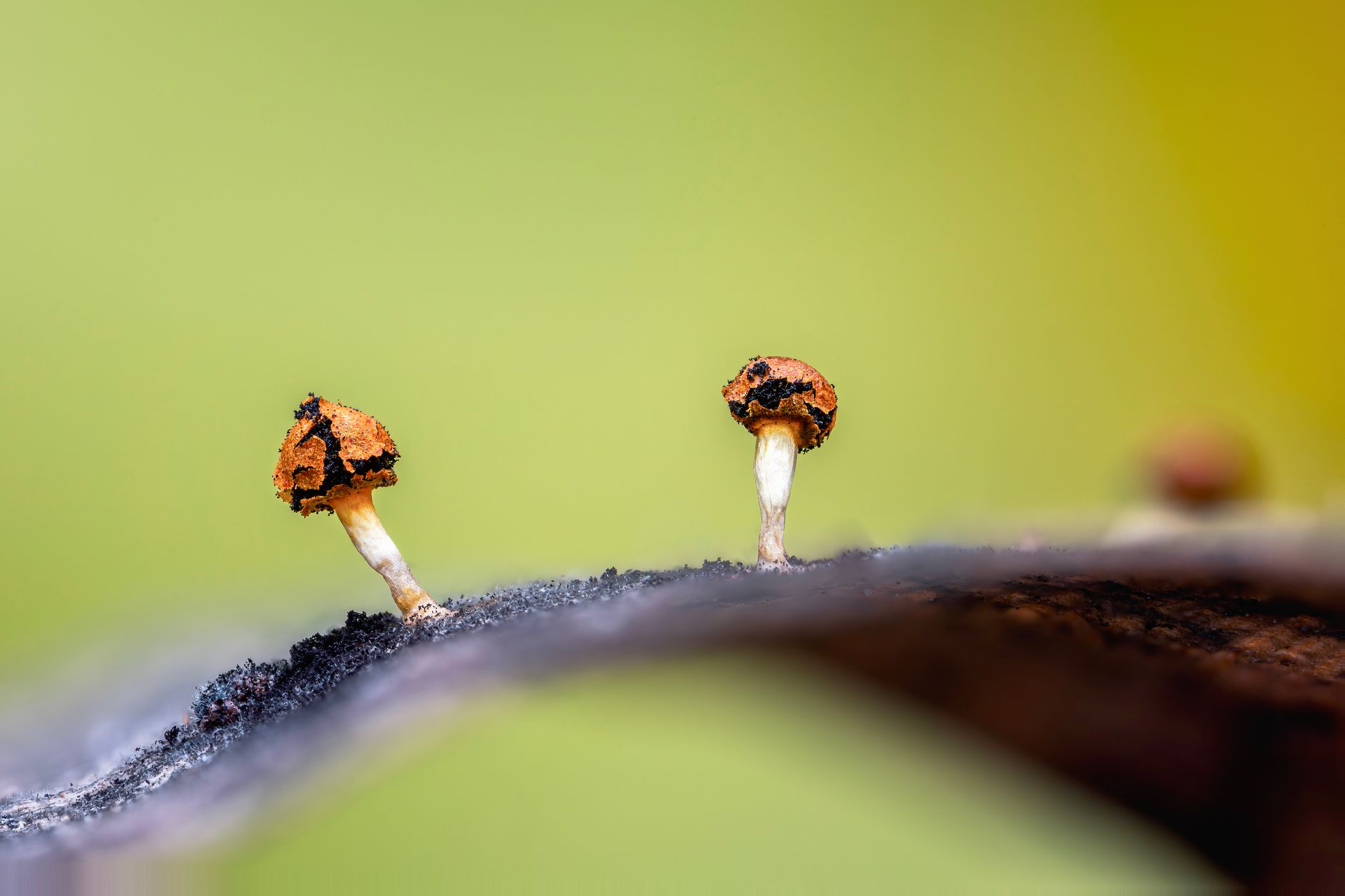
Cordyceps militaris is ready to harvest when the clubs reach 2 to 3 inches tall and the tips are still rounded. This usually happens 45 to 60 days after inoculation. The clubs should be bright orange and firm. If the tips start to open or release spores, you have waited too long. Spore release can coat the fruiting chamber and reduce future flushes.
Harvest by twisting the cluster gently at the base or cutting with clean scissors. Remove the whole mushroom, including any small stem buried in the rice. Leaving stumps can invite mold. You can harvest all at once or pick individual clubs as they mature. A single jar often produces 10 to 15 grams of dried mushrooms.
Dry the harvest at 100 to 110°F in a food dehydrator or on a mesh screen in a warm, dry room. The mushrooms should snap cleanly when fully dry. Store in an airtight jar away from light. Dried Cordyceps militaris keeps for up to a year. You can also use fresh mushrooms in teas or tinctures.
Some jars will produce a second flush, but yields are usually small. After the first harvest, rehydrate the substrate with a light mist and return it to fruiting conditions. Do not expect a full second flush. Most home growers start a new batch instead of waiting. The used substrate can be composted.
- Troubleshoot common Cordyceps problems
Contamination is the most common issue for new Cordyceps growers. Green mold, black mold, and bacterial wet spot appear within days of inoculation or after shaking. If a jar shows contamination, do not open it indoors. Dispose of it outside or pressure cook it before opening. For photos and descriptions, see mushroom contamination identification guide.
No fruiting after full colonization usually means the jar is too warm or too dark. Check your fruiting temperature and light cycle. Cordyceps will stall above 70°F. Lower the temperature to 60 to 65°F and increase light intensity. Some strains need a cold shock, so a few days at 55°F can jump-start primordia.
Thin, pale mushrooms are almost always a light problem. Move the light closer and extend the photoperiod to 14 hours if needed. Humidity that is too low causes dry, cracked clubs. Raise humidity to 90 percent and avoid direct fan airflow. Yellow or orange liquid on the mycelium is normal, but sticky, foul-smelling liquid is bacterial.
If growth is slow from the start, the culture may be weak or old. Freshly expanded liquid culture colonizes faster. Keep your master culture in the refrigerator and make a new liquid culture every few months. Also check your grain moisture. Too wet or too dry rice both slow growth. The rice should be moist but not standing in water.
Red Flags & Warnings
- 🚨 Never consume wild Cordyceps or any wild mushroom without an expert identification. Some lookalikes are toxic.
- 🚨 Do not skip the 90-minute 15 PSI sterilization. Steaming or boiling cannot kill all bacterial endospores in nutrient-rich rice substrate.
- 🚨 Open contaminated jars only outside or after pressure cooking. Spreading mold spores indoors will ruin future batches.
- 🚨 Keep fruiting temperatures below 70°F. Warmer conditions suppress fruiting, encourage bacteria, and produce pale mushrooms.
- 🚨 Use a still air box. Air currents from fans, windows, or your breath are major sources of contamination.
- 🚨 Do not eat contaminated or slimy mushrooms. Healthy Cordyceps is firm and orange, not soft or smelly.
Frequently Asked Questions
Can I grow Cordyceps sinensis at home?
Cordyceps sinensis is extremely difficult to cultivate because it requires an insect host and high-altitude conditions. Cordyceps militaris is the practical alternative for home growers. It produces similar compounds and fruits on rice-based substrates.
Do I need a live insect host?
No. Cordyceps militaris can grow on sterilized brown rice with added nutrients. Some commercial growers use silkworm pupae, but rice is simpler for home use. The rice method produces consistent results without animal products.
How long does the whole process take?
You can harvest 45 to 60 days after inoculation. Colonization takes 14 to 21 days at 65 to 70°F. Fruiting takes another 2 to 3 weeks, depending on temperature and light.
What does contamination look like?
Green or black patches, slimy gray spots, and a sour smell are common signs. Healthy Cordyceps mycelium is white to pale orange. If you are unsure, isolate the jar and watch it for a few days.
Can I use brown rice without supplements?
You can try plain brown rice, but yields will be lower. Adding a small amount of nutritional yeast and sugar greatly improves mycelial growth and fruiting. Some growers also add peptone or potato dextrose broth.
Is homegrown Cordyceps militaris safe to consume?
For most healthy adults, yes, when grown on food-grade substrate and properly dried. However, Cordyceps can interact with medications and may not be suitable for people with autoimmune conditions. Consult a healthcare provider before regular use.
What Should You Remember?
- Choose C. militaris: It is the only Cordyceps species practical for home cultivation without an insect host.
- Sterilize properly: Use a pressure cooker at 15 PSI for 90 minutes to kill contaminants.
- Use brown rice substrate: A per-jar recipe of 1/2 cup rice and 3/4 cup nutrient broth works well.
- Colonize cool: Keep jars at 65 to 70°F for 14 to 21 days until white mycelium covers the rice.
- Trigger fruiting: Move to 60 to 65°F, 85 to 95 percent humidity, and 12 hours of light daily.
- Harvest before spore release: Pick clubs at 2 to 3 inches tall, about 45 to 60 days after inoculation.
This article is for general information only. Mushroom identification and consumption carry health and safety risks , never eat a wild mushroom unless positively identified by an expert, and follow sterile technique and food-safety guidance for home grows.