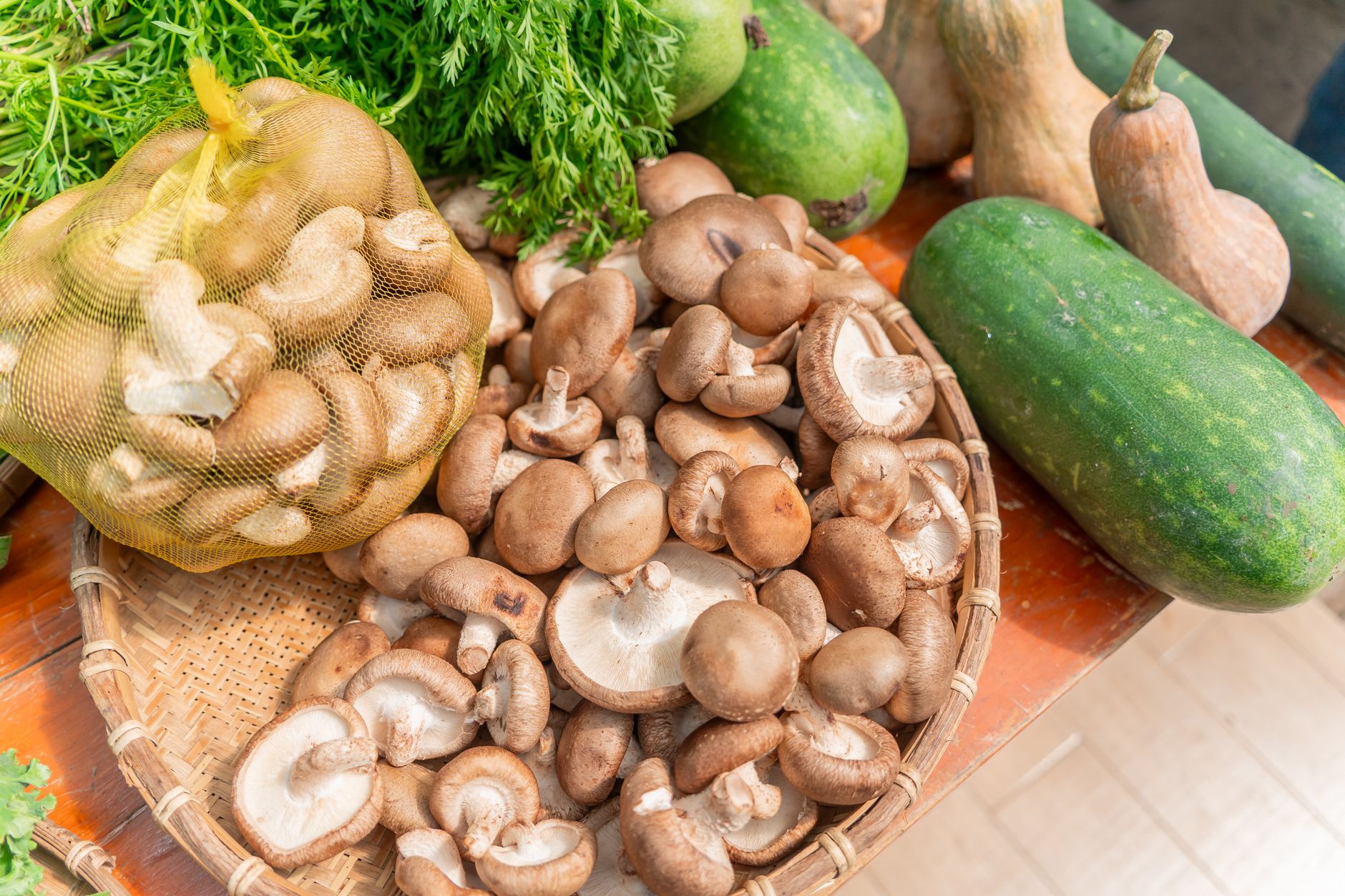
Shiitake mushrooms are one of the most rewarding edible fungi for home growers. They have a rich, smoky flavor and a firm texture that holds up well in cooking. The process is not difficult, but it does require patience and clean technique. You can grow shiitake on hardwood logs outdoors or on supplemented sawdust blocks indoors. Your method determines how fast you get mushrooms and how much daily care they need. For a deeper comparison of base materials, start with the best mushroom substrate guide.
Shiitake takes longer than oyster mushrooms, yet it remains beginner friendly. Logs can fruit for years with little daily attention. Sawdust blocks produce faster and fit indoor spaces. Either way, you need clean spawn, proper moisture, and the right temperature range. The North American Mycological Association stresses that cultivated mushrooms are safest when grown from trusted spawn. Never eat a wild mushroom unless an expert positively identifies it.
This guide gives specific data points that prevent common failures. Shiitake mycelium colonizes grain or sawdust at 70 to 75 degrees Fahrenheit. Fruiting usually requires 85 to 90 percent humidity and a temperature drop to 60 to 70 degrees Fahrenheit. Sawdust blocks often colonize in 30 to 45 days. Outdoor logs can take 6 to 18 months before the first harvest. Read each step carefully to avoid mistakes that stall or kill your grow.
What You’ll Need
- Shiitake sawdust spawn
- Hardwood sawdust pellets
- Wheat bran
- Autoclavable mushroom grow bags
- Pressure cooker rated for 15 PSI
- 70% isopropyl alcohol
- Spray bottle
- Thermometer and hygrometer
How Do You Grow Shiitake Mushrooms at Home?
- Choose Your Growing Method: Logs or Sawdust Blocks
Start by deciding between hardwood logs and supplemented sawdust blocks. Logs work well outdoors, need little daily attention, and can fruit for several years. The tradeoff is time; a bolt of oak or sweetgum may not fruit for 6 to 18 months after inoculation. Sawdust blocks fruit much faster indoors, usually within 60 to 90 days from spawn. Your choice depends on available space, climate, and patience.
If you want a low effort first run, a ready-to-fruit shiitake mushroom grow kit is a smart entry point. Check the shiitake mushroom grow kit on Amazon. These kits come with a colonized block and simple instructions. Still, growing from spawn teaches you the full process. For a tested kit list, see best mushroom grow kits 2026.
The two methods share core principles. Shiitake mycelium must fully colonize a hardwood food source. Then a drop in temperature and a rise in humidity trigger pinning. Logs rely on seasonal changes to do this. Indoor blocks let you control the trigger precisely. Many growers start with blocks to learn the fungus before moving to logs.
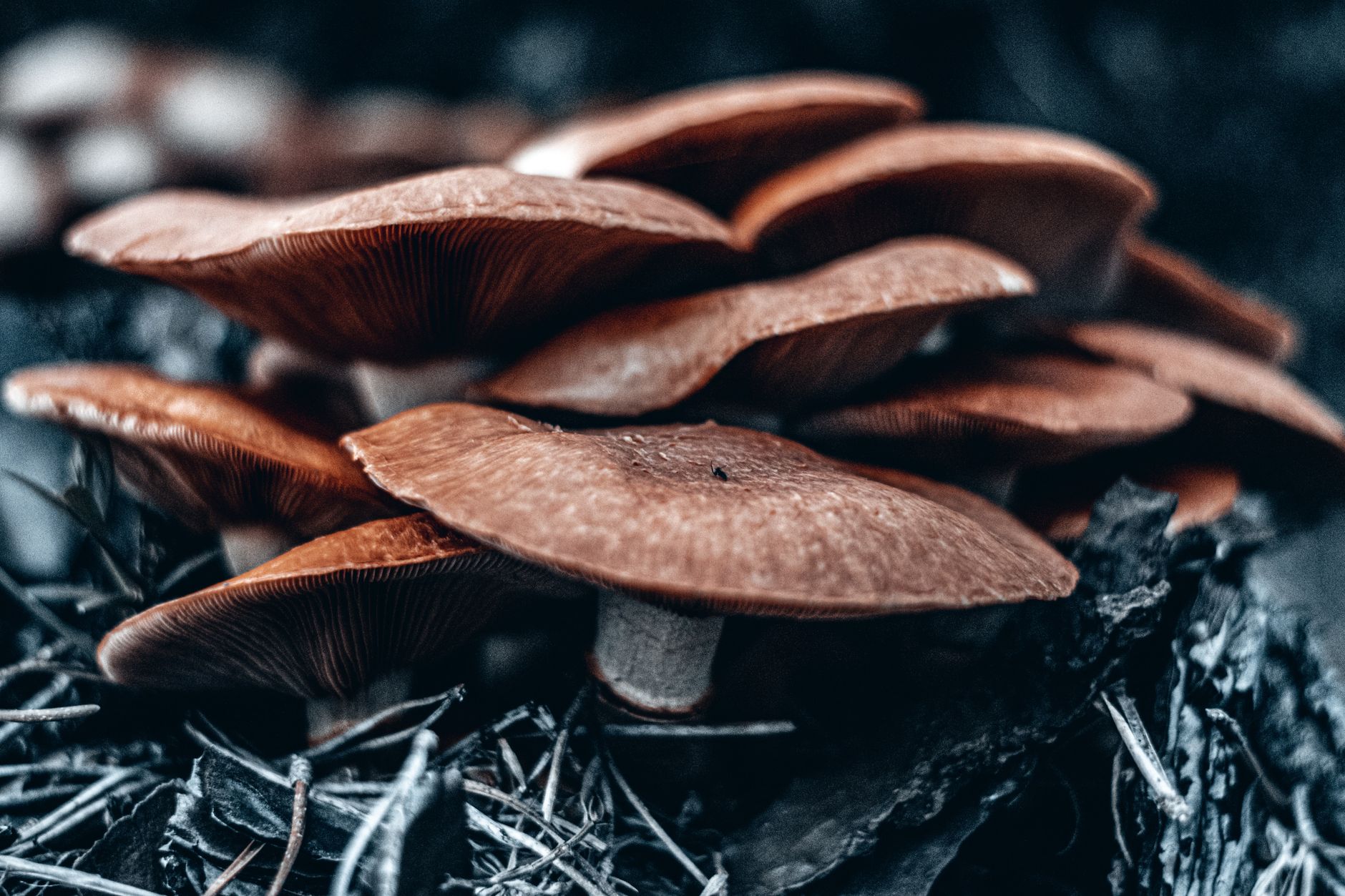
- Gather Supplies and Prepare a Clean Workspace
Gather your supplies before you start. You need shiitake sawdust spawn, hardwood fuel pellets or sawdust, wheat bran, water, and autoclavable mushroom grow bags. A pressure cooker that reaches 15 PSI is essential for sterilizing supplemented sawdust. You will also need gloves, 70 percent isopropyl alcohol, and a clean workspace. A still air box is helpful but not required for beginners.
Quality ingredients prevent most failures. Hardwood sawdust pellets work well because they are uniform and already dried. Check the mushroom grow bags on Amazon. Check the hardwood sawdust pellets on Amazon. Use only hardwood species like oak, maple, or beech. Softwood pellets from pine or fir contain resins that inhibit shiitake growth.
Prepare a clean area before opening any sterile supplies. Wipe counters with soapy water, then spray with 70 percent alcohol. Wash your hands and forearms. Contamination from mold or bacteria is the top reason home blocks fail. Treat every surface that touches spawn or sterilized substrate as a potential contamination source.
- Prepare and Sterilize Your Substrate
For a standard fruiting block, mix 5 cups of hardwood sawdust, 1 cup of wheat bran, and about 1 and 1/4 cups of water. This is a small test batch. Scale up while keeping the ratio at roughly 80 percent sawdust and 20 percent bran by dry weight. The final substrate should reach field capacity. Squeeze a handful; it should clump without releasing more than a drop of water.
Load the mixed substrate into grow bags. Fold the bag tops and sterilize at 15 PSI for 90 minutes. Shiitake is less aggressive than oyster mushroom mycelium, so it needs a highly nutritious substrate. The bran supplement makes the mix prone to contamination if you skip sterilization. Pasteurization is not reliable for supplemented sawdust. For more on base materials, see the best mushroom substrate guide.
After the pressure cooker cycle ends, let it cool completely inside the closed cooker. Opening too early risks pulling in unfiltered air and contaminating the blocks. Once the bags are cool enough to handle, move them to your clean workspace. You are now ready to inoculate. Any lingering warmth above 80 degrees Fahrenheit can kill shiitake spawn.
- Inoculate the Substrate with Shiitake Spawn
Inoculate each bag with shiitake sawdust spawn at a rate of 5 to 10 percent of wet substrate weight. For a 5 pound bag, that means about 4 to 8 ounces of spawn. Use a sanitized spoon or gloved hands to break up the spawn and mix it evenly through the cooled substrate. Even distribution speeds colonization and reduces the chance of stalled patches.
Work in a still air box if possible. Turn off fans and close windows to keep air still. Wipe the outside of the spawn bag and the substrate bag with alcohol. Open both bags only inside the clean area. If you want to produce your own spawn first, read how to make grain spawn. Most beginners should purchase fresh shiitake spawn from a reputable supplier.
After mixing, fold the bag tops closed and seal with a paperclip or impulse sealer. Allow a small filter patch for gas exchange. Shiitake mycelium needs some oxygen during colonization, but not much. Label the bag with the date and strain name. This lets you track colonization days accurately.
- Incubate and Monitor Colonization
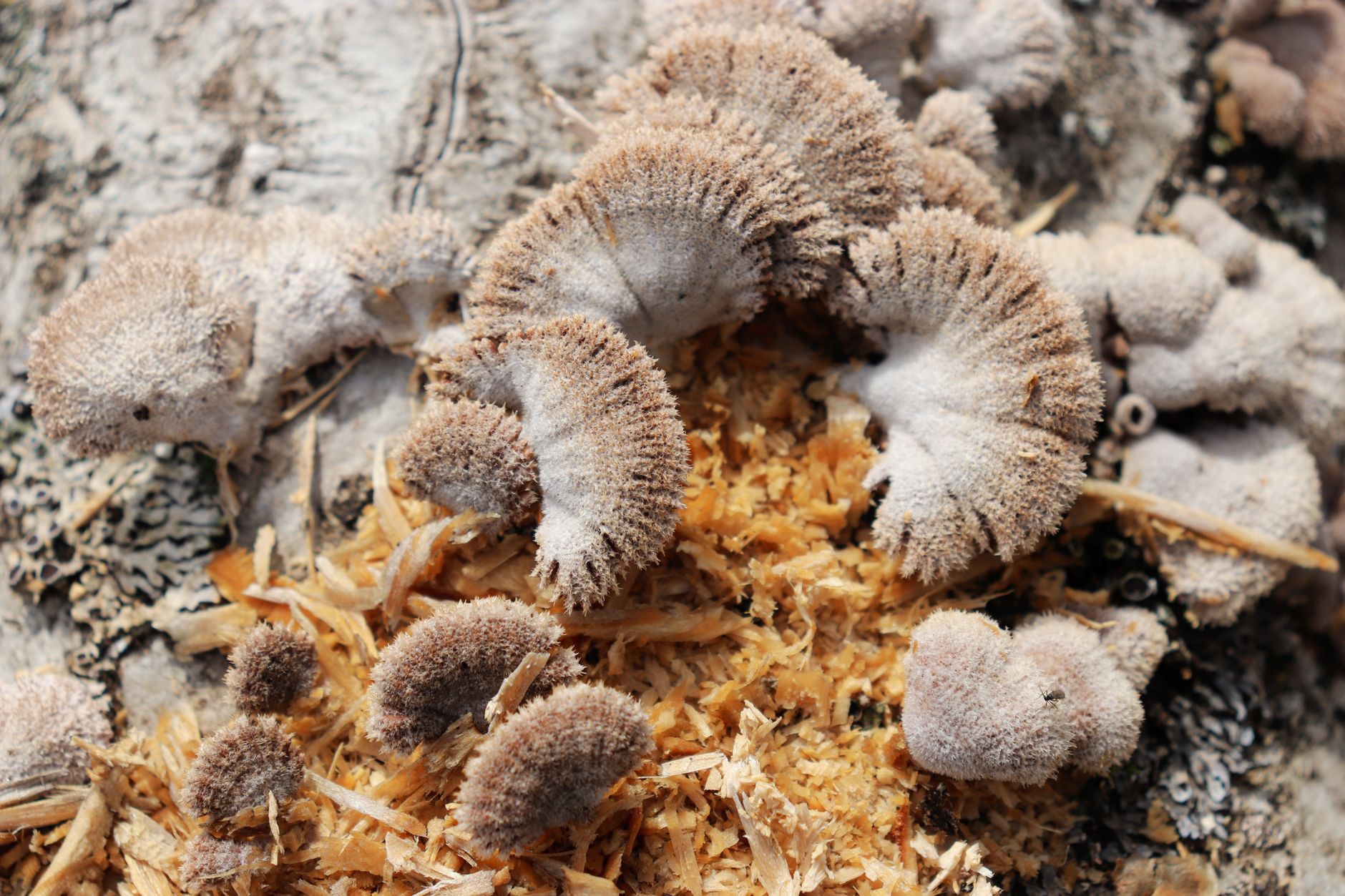
Place the inoculated bags in a dark space at 70 to 75 degrees Fahrenheit. Shiitake mycelium colonizes supplemented sawdust in 30 to 45 days under these conditions. Avoid light, which can trigger premature pinning. Check every few days for signs of growth. The mycelium starts as small white dots and then spreads into a dense white mat.
Do not open the bag during colonization. The filter patch allows gas exchange. Opening the bag exposes the uncolonized substrate to mold spores. Keep the area dry and free of clutter. Penn State Extension notes that mushroom contamination often comes from airborne spores in the home. So stable temperature and sealed bags are your best defense.
Watch for contamination clues. Healthy shiitake mycelium is white, slightly fuzzy, and smells earthy. Green, black, or orange patches mean mold. A sour or sweet smell means bacteria. If you see any of these signs, seal the bag and dispose of it outside. For a full visual guide, see mushroom contamination identification.
- Trigger Fruiting by Soaking and Cold Shock
Once the block is fully white and firm, it is ready to fruit. Remove the block from the bag. Soak it in cold water for 12 to 24 hours. Use clean water and a clean container. The cold soak rehydrates the block and provides the temperature shock that triggers shiitake pinning.
Move the soaked block into a fruiting chamber with high humidity. Target 85 to 90 percent relative humidity and a temperature between 60 and 70 degrees Fahrenheit. Fresh air exchange is important. Shiitake pins form best when carbon dioxide stays low. You can build a simple chamber from a clear tote with perlite or use a purpose built tent. See DIY mushroom fruiting chamber.
Mist the sides of the chamber, not the block directly. Use a spray bottle with filtered or boiled water. Fan the chamber two or three times a day to replace stale air. Pins should appear within 1 to 2 weeks. If the block dries out, soak it again. If no pins form, lower the temperature a few degrees and increase air exchange.
- Harvest Shiitake Mushrooms at the Right Time
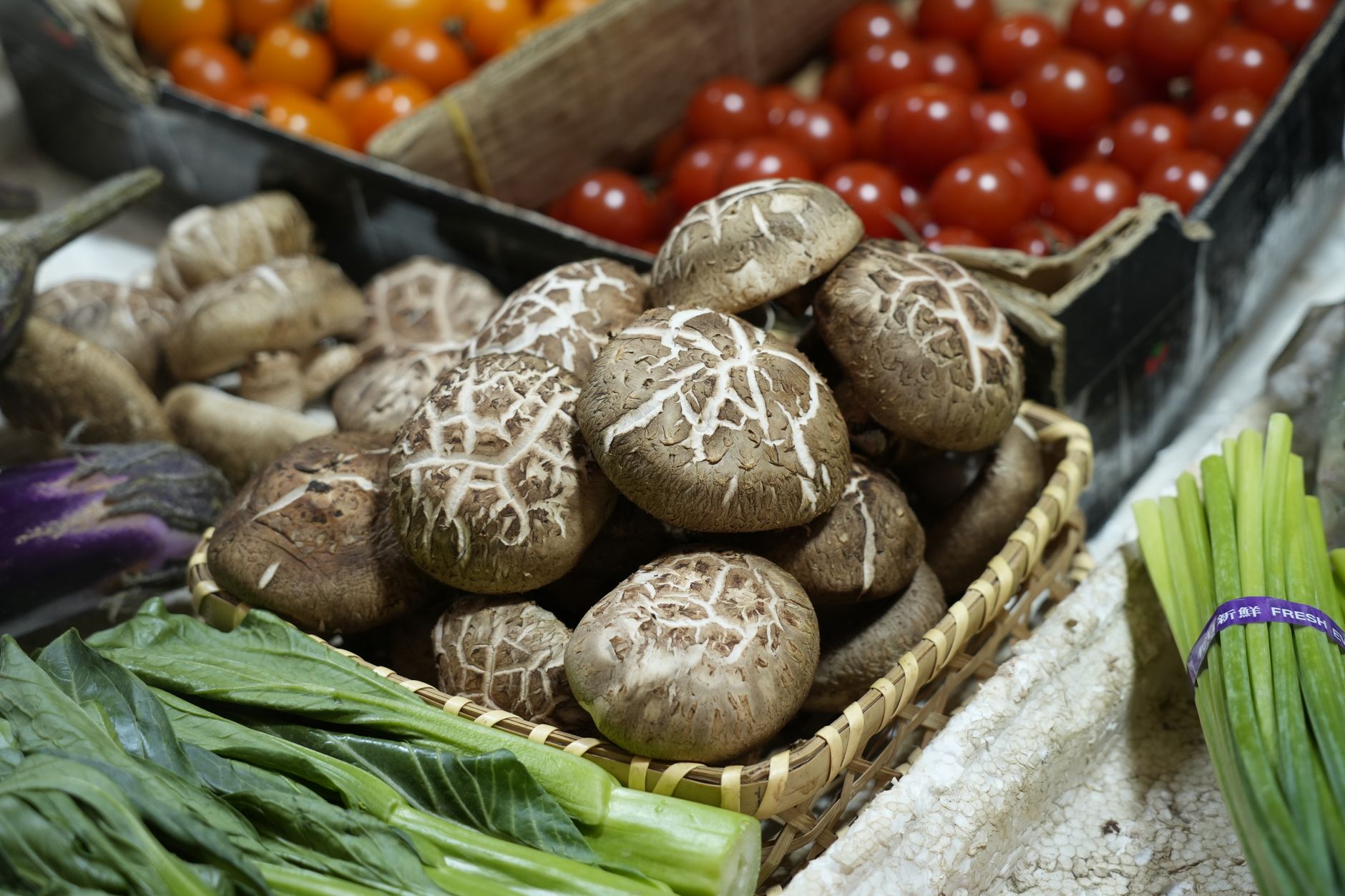
Harvest shiitake mushrooms when the caps are 70 to 90 percent open. The edges should still curl slightly downward. If the caps flatten completely and drop spores, they are still edible but less firm. Harvest by twisting the stem gently or cutting close to the block. Try not to damage the block surface.
Most first flushes appear in clusters and mature at different rates. Pick individual mushrooms as they reach the right stage. Leaving overripe mushrooms on the block draws energy away from new pins. Fresh shiitake keeps in a paper bag in the fridge for about a week. You can also dry them in a food dehydrator for longer storage.
After harvest, rest the block for 7 to 14 days. Keep it at room temperature and away from direct sunlight. The block needs time to recover and reabsorb nutrients. Then repeat the cold soak to start another flush. Expect 2 to 4 flushes from a sawdust block before it loses vigor.
- Maintain Your Block or Log for Repeated Flushes
For indoor sawdust blocks, the cycle is soak, fruit, harvest, and rest. After each flush, the block shrinks and yields less. Watch for signs of contamination between flushes. If the block becomes soft, slimy, or foul smelling, compost it. A spent block can be broken up into garden soil as an amendment.
Outdoor log growers need a different rhythm. Inoculated oak logs sit in shade and receive natural rainfall. Fruiting happens when seasonal temperatures shift after rain. Logs can produce for 3 to 5 years. Check logs for moisture during dry spells. Soak them in a tub of water for 24 hours if they seem overly dry.
Common problems include stalled colonization and no pinning. Stalled colonization usually means the substrate was too wet or too dry. No pinning may mean the block still needs more time or a stronger cold shock. Keep records of temperatures, soak durations, and flushes. Your notes will help you adjust for the next round. If you enjoy this process, try a faster species like oyster mushrooms to compare growth habits.
Red Flags & Warnings
- 🚨 Never eat a wild mushroom unless an expert positively identifies it. Cultivated shiitake from trusted spawn is a different matter, but do not guess with wild fungi.
- 🚨 Do not use softwood or treated wood for logs or sawdust. Pine, fir, and pressure treated lumber contain compounds that can slow or kill shiitake mycelium.
- 🚨 Discard any bag that shows green, black, or orange mold or a sour smell. Do not open contaminated bags indoors, and dispose of them outside your grow area.
- 🚨 Follow your pressure cooker instructions exactly. Never exceed recommended fill levels or open the cooker under pressure. The steam inside can cause severe burns.
- 🚨 Do not mist blocks heavily after pins form. Excess water on developing caps can cause bacterial blotch and ruin the flush.
- 🚨 Buy fresh shiitake spawn from a reputable supplier. Old or poorly stored spawn loses vigor and may fail to colonize.
Frequently Asked Questions
How long does it take to grow shiitake mushrooms at home?
Sawdust blocks typically fruit 60 to 90 days from inoculation. Logs can take 6 to 18 months to produce their first harvest.
Can I grow shiitake mushrooms on coffee grounds?
No. Shiitake needs hardwood sawdust or logs. Coffee grounds lack the right structure and are more prone to contamination.
What is the best temperature for shiitake fruiting?
Fruiting works best between 60 and 70 degrees Fahrenheit with 85 to 90 percent humidity after a cold soak. Some strains fruit slightly warmer.
How many times will a shiitake block fruit?
Most supplemented sawdust blocks produce 2 to 4 flushes. Outdoor hardwood logs can produce for 3 to 5 years with proper care.
Do I need a pressure cooker to grow shiitake?
Yes for supplemented sawdust blocks. You can avoid pressure cooking by buying ready-to-fruit blocks or using outdoor logs.
Is it safe to eat homegrown shiitake mushrooms?
Yes when grown from trusted spawn and harvested before spoilage. Always cook them thoroughly and never eat wild mushrooms unless an expert identifies them.
What Should You Remember?
- Choose your method: sawdust blocks fruit faster; logs produce longer.
- Keep it clean: sterile technique prevents most contamination failures.
- Substrate matters: use 80 percent hardwood sawdust and 20 percent wheat bran.
- Control conditions: colonize at 70 to 75 degrees Fahrenheit; fruit at 60 to 70 degrees Fahrenheit and 85 to 90 percent humidity.
- Cold shock fruiting: soak colonized blocks for 12 to 24 hours to trigger pins.
- Harvest on time: pick when caps are 70 to 90 percent open.
This article is for general information only. Mushroom identification and consumption carry health and safety risks , never eat a wild mushroom unless positively identified by an expert, and follow sterile technique and food-safety guidance for home grows.