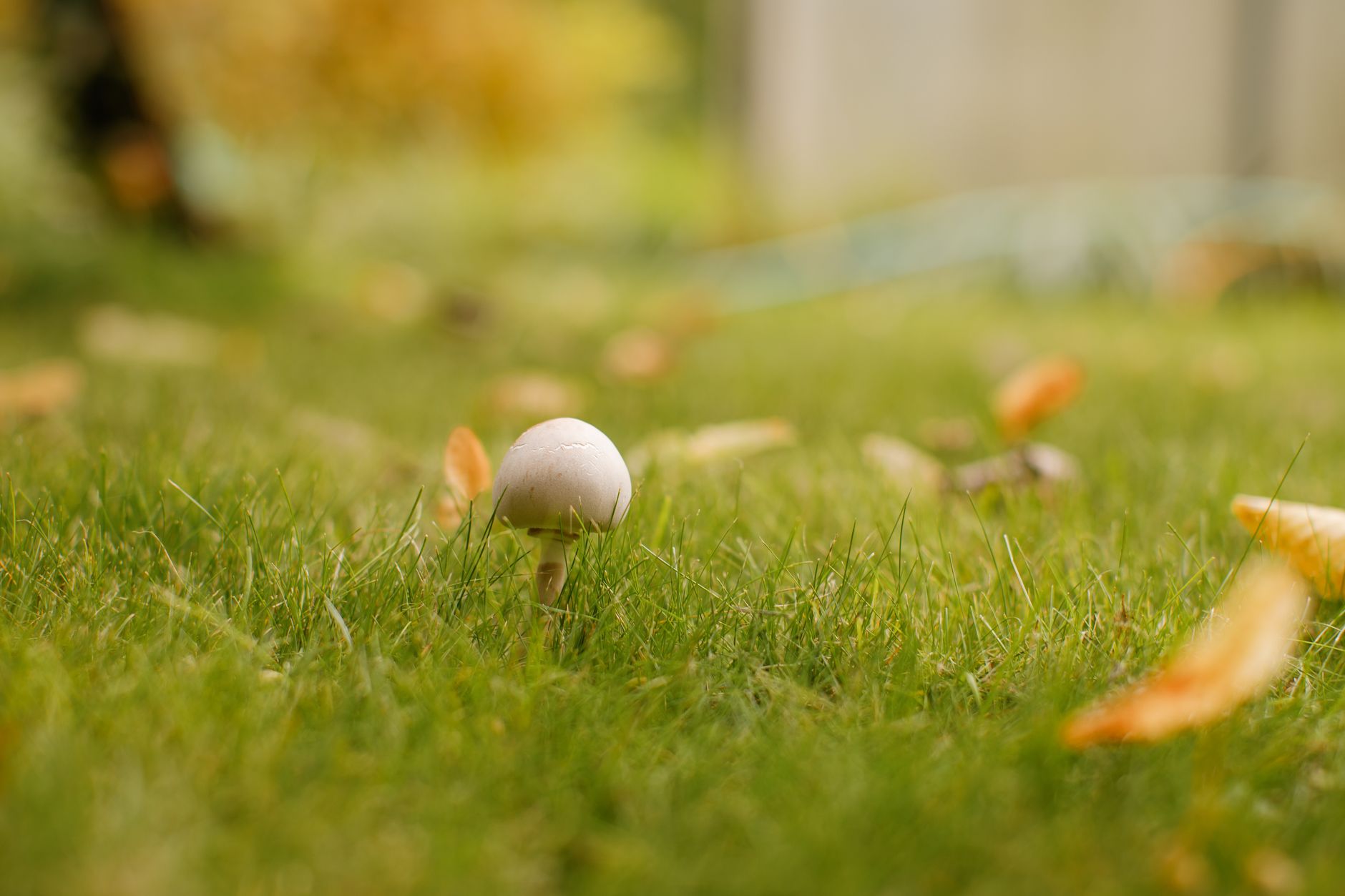
White mushrooms push through lawn thatch after rain, and every year they trigger the same question: is this edible or deadly? I grow mushrooms indoors, but I still stop when I see white caps in my yard. The reason is simple. Several common white lawn species look nearly identical, and one of them, Amanita bisporigera, can destroy your liver within days. The North American Mycological Association (NAMA) warns that no field characteristic except a full spore print and careful base inspection is enough for beginners. This guide compares five white yard mushrooms most often encountered. You will learn what separates a safe meadow mushroom from a toxic green-spored parasol. You will also learn which white mushrooms make sense to grow inside instead of guessing outside.
For this comparison I looked at five species that appear as white or whitish fruiting bodies in lawns, gardens, and mulched beds. I prioritized two questions: how easily can a home grower identify the mushroom, and whether there is a realistic indoor cultivation path. White button mushrooms (Agaricus bisporus) are the easiest safe alternative. If you want to grow white mushrooms at home, start with our button mushroom growing guide. It walks through composted manure substrate, casing, and fruiting conditions. You will also want a solid mushroom substrate guide before you buy bulk materials.
Some wild yard mushrooms are edible, but most are not worth the risk. A green spore print can identify Chlorophyllum molybdites, the most common cause of mushroom poisonings in North America. A white spore print, on the other hand, still includes both edible Agaricus and deadly Amanita. That is why I never tell beginners to eat wild lawn mushrooms. Instead, I recommend growing a reliable white mushroom indoors under controlled conditions. Penn State Extension provides detailed Agaricus cultivation guidance for home and small farm production. Their recommended spawn run temperature is 70-75°F, followed by casing and fruiting at 60-65°F with 85-95% humidity. Those numbers matter more than any wild guess in your grass.
I wrote this comparison as a grower, not a forager. The goal is to help you recognize what is in your yard and decide if it should stay there. You can pick and photograph mushrooms for identification. Do not eat them. If you want white mushrooms for the kitchen, use a grow kit or spawn. Our best mushroom grow kits 2026 list includes reliable indoor options. For a complete controlled environment, see our DIY mushroom fruiting chamber guide. That approach removes the lookalike problem entirely.
How Do the Top Options Compare?
| Species | Best For | Key Identification | Edibility | Cultivation Gear |
|---|---|---|---|---|
| Agaricus campestris (Meadow Mushroom) | Safe edible for experienced foragers | Pinkish-brown gills, chocolate brown spore print, no yellow staining | Edible when young and confirmed | Check button grow kit |
| Chlorophyllum molybdites (Green-Spored Parasol) | Understanding lawn toxicity | Large whitish cap, greenish-gray spore print, scaly stem | Toxic: severe GI distress | Not cultivated |
| Amanita bisporigera (Destroying Angel) | Learning deadly lookalikes | Pure white cap and gills, sac-like volva, smooth stem | Deadly poisonous | Not cultivated |
| Coprinus comatus (Shaggy Mane) | Edible when young | White cylindrical cap with shaggy scales, black inky gills | Edible only when young | Not commonly cultivated |
| Calvatia gigantea (Giant Puffball) | Large edible white ball | Round white fruitbody, pure white interior, no gills | Edible when pure white | Not commonly cultivated |
Never identify wild mushrooms by photos alone. Use a spore print and check the stem base. The edibility statements here assume expert confirmation. For safe indoor white mushrooms, choose cultivated Agaricus bisporus.
1. Agaricus campestris (Meadow Mushroom) , Best for safe edible white yard mushroom with expert ID
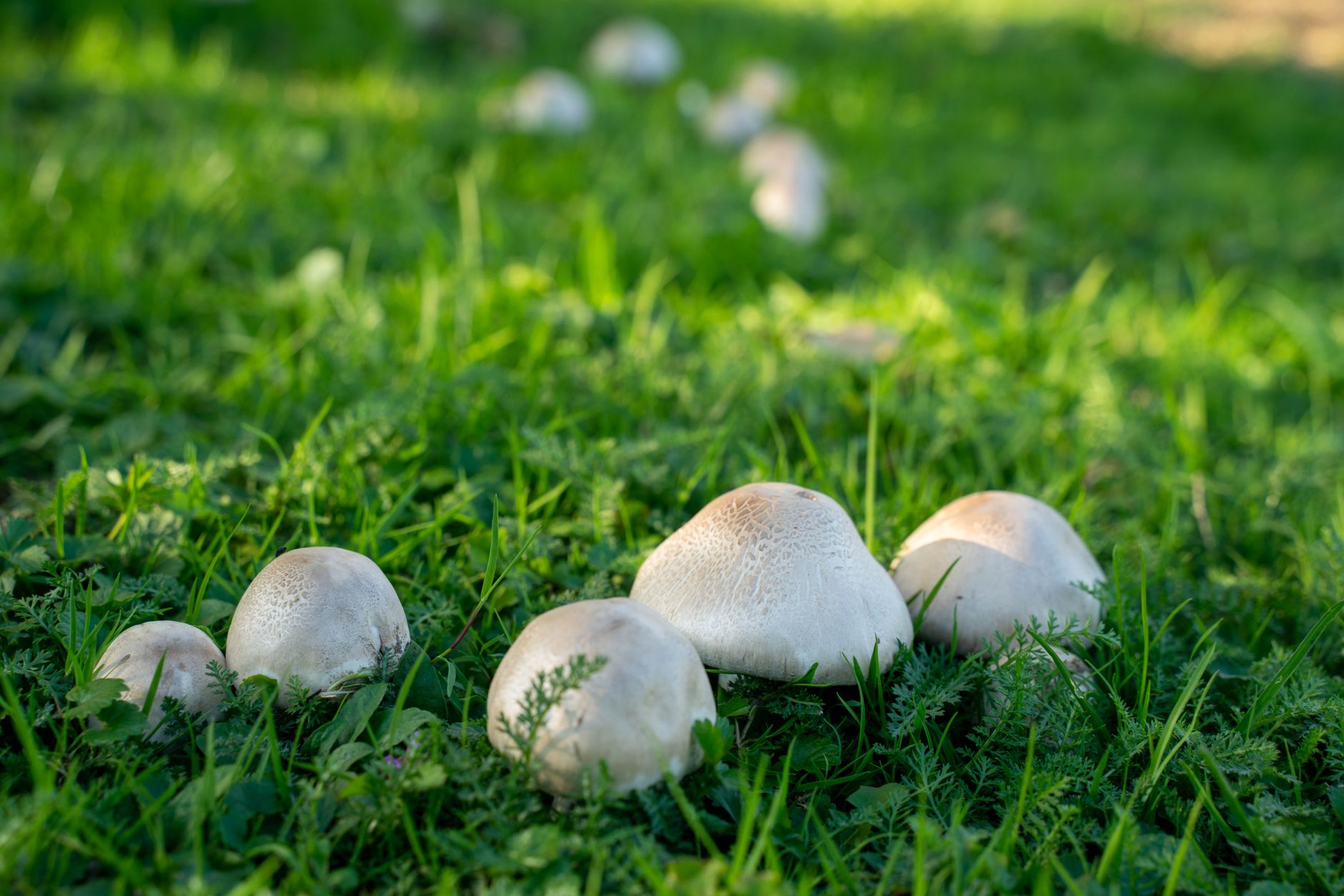
Meadow mushroom is the wild relative of the white button mushroom. It has a white cap that may show faint yellowish bruising and a smooth or slightly scaly surface. The gills start pink and mature to dark chocolate brown. The spore print is chocolate brown. This brown spore print separates it from white-spored Amanita species. Always dig up the stem base and check for a sac-like volva. Meadow mushrooms have no volva and often a thin ring that disappears.
If you want the same mushroom without risk, grow Agaricus bisporus indoors. Penn State Extension recommends composted horse manure or straw-based substrate with a spawn run at 70-75°F and relative humidity above 85%. After 14-21 days, case with 2 inches of peat or coir, then fruit at 60-65°F and 85-95% humidity. Yields typically range 3-5 pounds per square foot over a crop cycle. See our button mushroom growing guide for step-by-step setup.
Do not eat wild meadow mushrooms unless you check the spore print and lack of volva. Many poisonings happen because people skip the base. A destroying angel looks similar but has white gills at maturity and a bulbous sac at the stem base. Compare spore prints side by side. Brown for Agaricus, white for Amanita. If your lawn has been treated with pesticides or herbicides, avoid eating any yard mushroom.
Key strengths:
- ✅ Chocolate brown spore print makes confirmation straightforward
- ✅ Edible and mild flavored when young and properly identified
- ✅ Common in lawns and grassy areas after rain
- ✅ Closely related to cultivated white button mushrooms
- ❌ Easily confused with deadly Amanita species by beginners
- ❌ Risk of chemical contamination from lawn treatments
- ❌ Not as productive as indoor Agaricus bisporus cultivation
Who it’s for: Experienced foragers who can check spore print, gill color, and stem base before eating.
2. Chlorophyllum molybdites (Green-Spored Parasol) , Best for learning the most common toxic lawn mushroom
Chlorophyllum molybdites is the most frequently consumed poisonous mushroom in North America. It appears in lawns, parks, and pastures after summer rain. The cap is large, often 4-10 inches across, whitish with tan-brown scales and a slightly flattened top. The gills start white and become greenish gray. That greenish spore print is the key. NAMA lists this species as a common cause of gastrointestinal poisonings because it looks like an edible shaggy parasol.
Symptoms usually begin 30 minutes to 3 hours after eating. Vomiting, diarrhea, and cramps can last for a day or more. The toxin is not usually fatal, but dehydration can be serious. Never put this in a basket. If you want a safe white mushroom for cooking, grow white button mushrooms on pasteurized substrate. Our best mushroom substrate guide explains how to prepare material without contamination. Green spores are not contamination, but if your indoor substrate turns green, see our mushroom contamination identification guide.
This species is not worth cultivating. Its large white cap might look impressive, but the risk and poor culinary value make it a terrible candidate. Use it as a test case for spore printing. Green spore deposit on paper or foil immediately rules out edible white mushrooms. Taking a spore print is simple: place the cap gill-side down on paper and cover it overnight.
Key strengths:
- ✅ Green spore print is a strong identification feature
- ✅ Common and easy to find for study
- ✅ Large cap makes it easy to photograph and spore print
- ❌ Causes severe vomiting and diarrhea if eaten
- ❌ Looks similar to edible parasol mushrooms
- ❌ No value as an indoor cultivation project
Who it’s for: Homeowners who want to identify the toxic mushroom in their lawn and avoid accidental poisoning.
3. Amanita bisporigera (Destroying Angel) , Best for learning deadly white mushroom identification
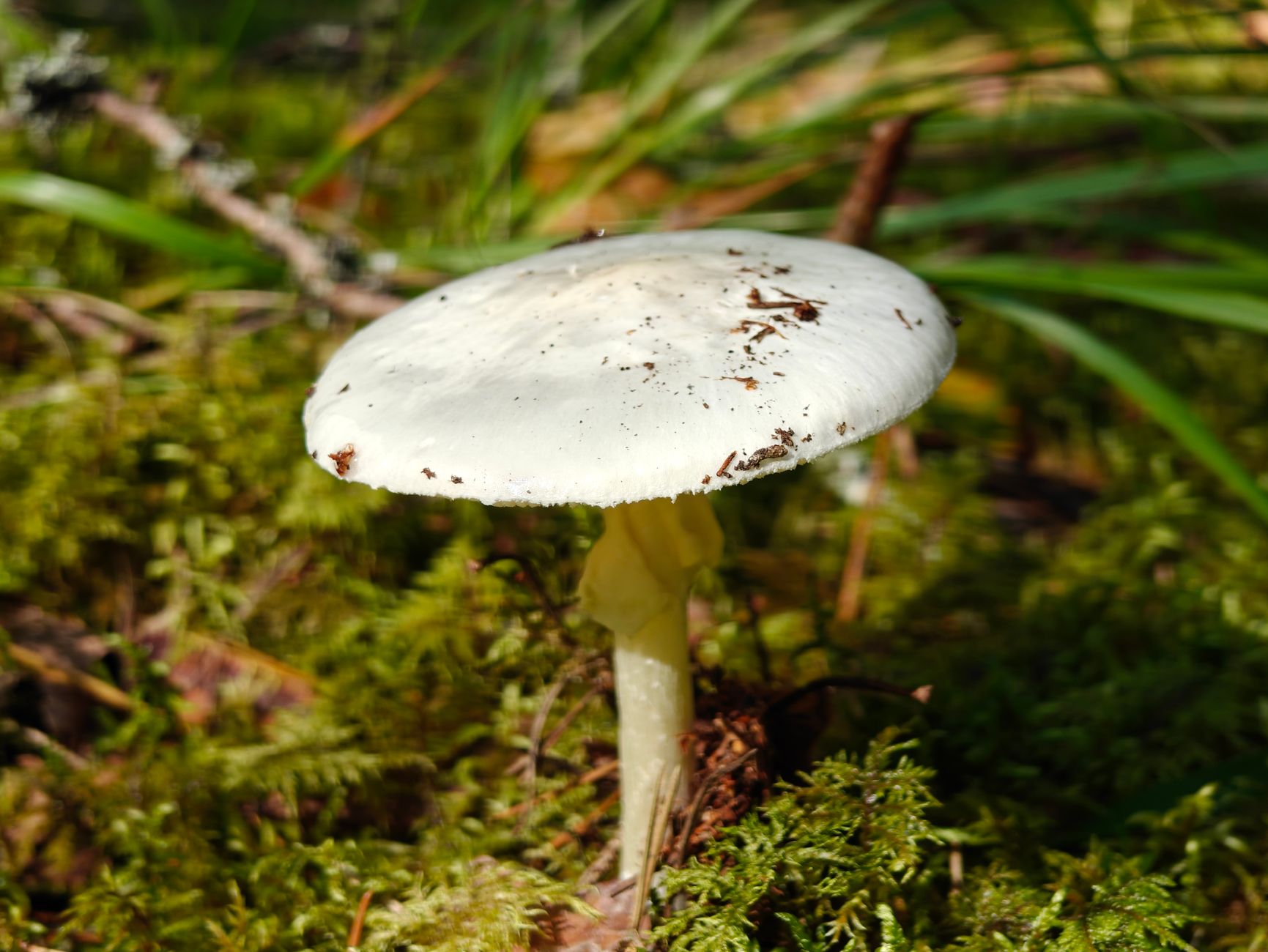
Destroying angel is the most dangerous white mushroom in North America. Amanita bisporigera and its relatives grow in wooded and garden areas, sometimes appearing in lawns near trees. The entire mushroom is pure white: cap, gills, stem, and ring. The base sits in a sac-like volva that may be hidden underground. This is the feature most people miss. Always dig up the whole stem base when checking a white mushroom.
This mushroom contains amatoxins. Symptoms may not appear for 6-12 hours, then severe vomiting and diarrhea can fade, followed by liver and kidney failure. There is no home remedy. Medical treatment is urgent. The USDA advises that no cooking, drying, or freezing destroys amatoxins. Do not handle it and then touch food without washing hands well, although skin absorption is not the main risk.
No one should attempt to cultivate Amanita species indoors. They are mycorrhizal and often require living tree roots. Even if possible, there is no reason. Spend your energy learning to avoid it. The white gills and volva are enough to reject any white yard mushroom for eating. If you want white mushrooms, grow Agaricus bisporus on composted manure. Check our button mushroom growing guide for a safe indoor process.
Key strengths:
- ✅ Pure white cap, gills, and stem warn identification
- ✅ Sac-like volva is a key field marker
- ✅ Learning it can prevent lethal poisoning
- ❌ Deadly poisonous, causing liver failure
- ❌ The volva can be buried and easily missed
- ❌ Mycorrhizal, so it is not cultivable at home
Who it’s for: Anyone who sees white mushrooms near trees and wants to rule out the deadliest lookalike.
4. Coprinus comatus (Shaggy Mane) , Best edible white yard mushroom when harvested young
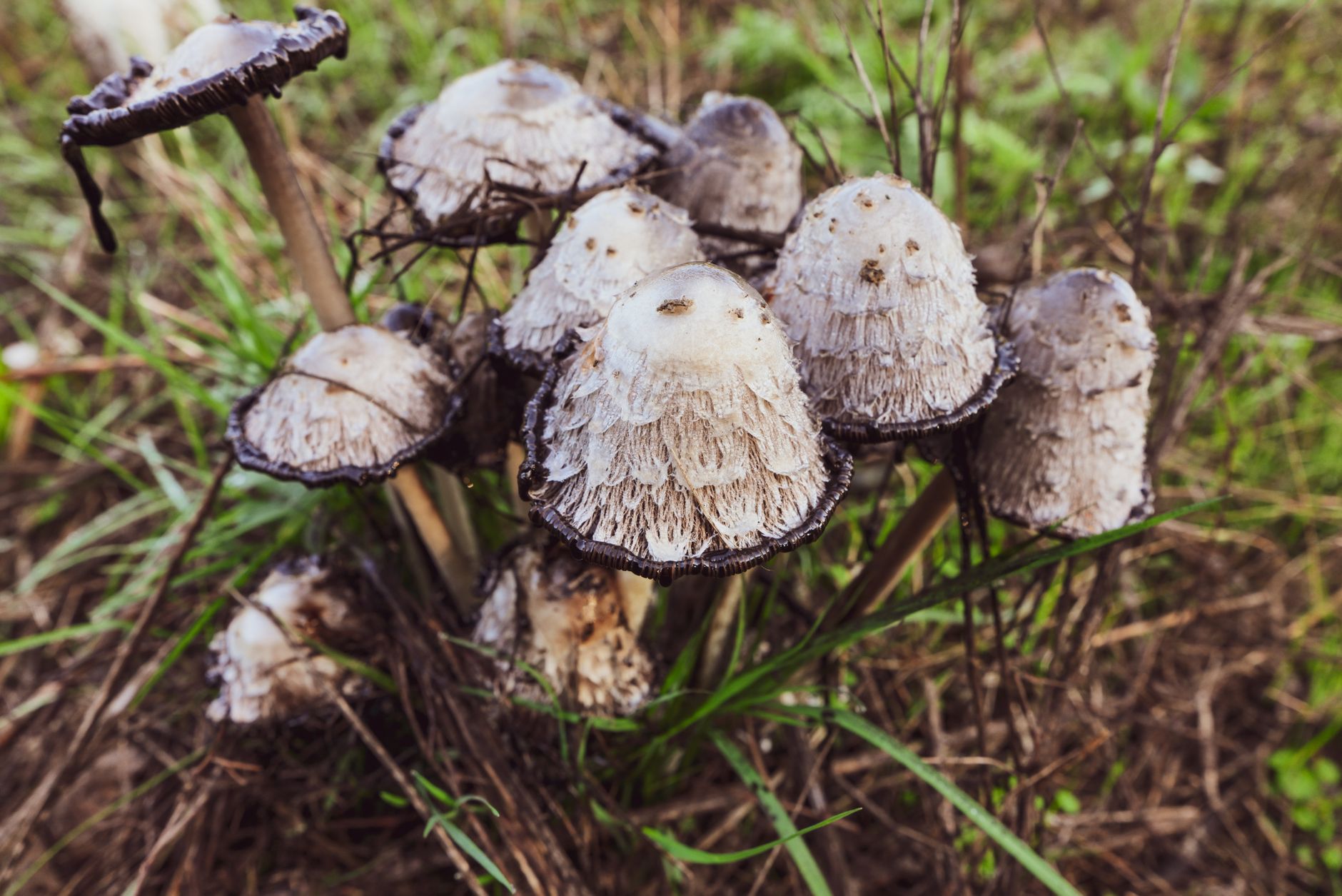
Shaggy mane is easy to recognize. It looks like a tall white cylinder with shaggy, overlapping scales. The cap starts white and gradually dissolves into black ink from the bottom up. That deliquescence is a built-in safety feature because only young, pure white specimens are edible. Once black ink appears, the mushroom is losing quality and can become unpleasant. Always cook shaggy manes soon after picking. They do not store well.
Coprinus comatus grows in lawns, gravel driveways, and disturbed soil. It can appear in clusters after fall rains. Spore print is black. The main confusion would be with inky caps, but few of those are pure white and shaggy. Still, do not eat unless an expert confirms. For home growers, this species is not commonly cultivated. It can be coaxed to fruit on composted substrate, but the short shelf life makes it a poor indoor crop compared to oyster or button mushrooms. See our best mushroom grow kits 2026 for easier starts.
If you want to experiment with a wild shaggy mane, you can clone it to agar. Expand cultures with how to make grain spawn, but spawning and fruiting are inconsistent. The mushrooms will deliquesce quickly, forcing you to harvest daily. Most growers choose more reliable species. Use our DIY mushroom fruiting chamber guide to control humidity for any indoor cultivation.
Key strengths:
- ✅ Distinct shaggy white cylinder shape is easy to identify
- ✅ Edible and mild tasting when all white
- ✅ Grows in common lawn and garden settings
- ✅ Self-destructs into ink, preventing old mushrooms from being eaten
- ❌ Shelf life is very short after picking
- ❌ Not commonly available as a reliable indoor grow kit
- ❌ Must be cooked immediately to avoid black inky mess
Who it’s for: Foragers who want a beginner-friendly edible white mushroom with a distinctive look.
5. Calvatia gigantea (Giant Puffball) , Best large white edible lawn mushroom when interior is pure white
Giant puffball is unmistakable. It appears as a white, round ball, often the size of a soccer ball or larger, in lawns and pastures. There are no gills. Slice it open. The interior must be pure white and marshmallow-like. If it is yellow, brown, or purple, it is too old or it could be a different, toxic earthball. Young puffballs are edible and have a mild, tofu-like texture that absorbs butter well.
Never eat a puffball unless the inside is pure white with no internal structure. Some Amanita buttons can look like small puffballs before they expand, but slicing them open reveals a developing mushroom outline. The USDA recommends cutting every puffball in half to check. This step prevents poisoning from amatoxin-containing Amanita eggs. I cannot stress this enough.
Cultivation of giant puffballs is not practical at home. They are saprobic and can grow in soil, but commercial spawn is rare. Instead, if you want an unusual white mushroom, consider white button or oyster mushrooms. Our best mushroom substrate guide gives you the material basics. For a controlled mushroom project, the DIY mushroom fruiting chamber guide will help you dial in humidity.
Key strengths:
- ✅ Large round white fruitbody is easy to recognize
- ✅ Pure white interior confirms edible for most species
- ✅ Mild flavor works as a meat substitute
- ✅ Slice-and-check method reduces lookalike risk
- ❌ Must be pure white inside; old specimens cause GI upset
- ❌ Can be confused with deadly Amanita buttons if not cut open
- ❌ Sporadic fruiting makes cultivation impractical
Who it’s for: Homeowners who find a soccer-ball-sized white ball in the yard and want to identify it safely.
Frequently Asked Questions
Are white mushrooms in my yard poisonous?
Some are. The destroying angel is deadly, and the green-spored parasol causes severe stomach sickness. Never eat any white yard mushroom unless an expert has positively identified it. A brown spore print points to meadow mushroom, but it is still not a beginner identification.
How do I tell a meadow mushroom from a destroying angel?
Check the gill color and spore print. Meadow mushrooms have pink gills that turn brown and a chocolate brown spore print. Destroying angels have pure white gills, a white spore print, and a sac-like volva at the stem base. Dig up the whole base.
Can I grow the white mushrooms from my yard indoors?
Most wild yard mushrooms are not practical to grow indoors. The one exception is the meadow mushroom’s close relative Agaricus bisporus. You can grow white button mushrooms on composted manure with a 70-75°F spawn run and 85-95% humidity during fruiting.
What happens if my dog eats a white yard mushroom?
Contact your veterinarian immediately. Take a photo and a spore print if possible. Dogs can be poisoned by the same mushrooms that harm humans, especially Amanita species. Do not wait for symptoms. Bring the mushroom sample with you to the vet.
Do white mushrooms in the yard mean the lawn is unhealthy?
Not usually. Many white mushrooms are saprobic and feed on dead roots, thatch, or buried wood. They indicate organic matter and moisture. Fungicides are not recommended because the fungus is usually below ground and often beneficial.
Which white yard mushrooms are safe to eat?
Meadow mushroom, shaggy mane, and giant puffball are edible only when young and correctly identified. Even then, they can cause reactions in some people. For reliable safe white mushrooms, grow an indoor button mushroom kit instead.
What Should You Remember?
- Positive ID first: Never eat any white yard mushroom until an expert confirms it. Destroying angel can kill.
- Spore print matters: Green spore print indicates Chlorophyllum molybdites, a toxic cause of GI distress.
- Cultivate indoors: Grow Agaricus bisporus on composted manure with a 70-75°F spawn run and 85-95% fruiting humidity.
- Check the base: Amanita species have a sac-like volva and white gills; avoid any white mushroom with these features.
- Young only: Shaggy mane and giant puffball are edible only when young; check for pure white or ink-free flesh.
- Use expert sources: NAMA and Penn State Extension provide reliable identification and cultivation guidance.
This article is for general information only. Mushroom identification and consumption carry health and safety risks , never eat a wild mushroom unless positively identified by an expert, and follow sterile technique and food-safety guidance for home grows.